
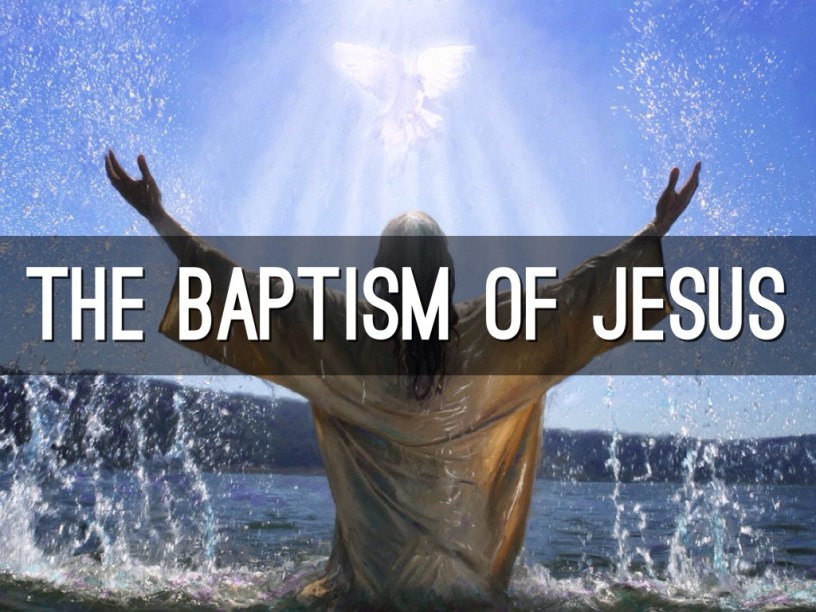
This is a copy of my talk given at Ayia Kyriaki and Saint Stephen’s in the Anglican Church of Paphos on Sunday 18 February 2024. The Bible Reading was Mark 1:9-15.
Prayer
Heavenly Father
I thank You for Your word
By the power of the Holy Spirit
May You speak to my heart
And change my life
In the precious name of Jesus I pray
Amen.
1. John The Messenger/Baptist
You couldn’t ignore a man like John. His appearance was unkempt, he wore garments woven from camel hair, and he was driven enough to forgo the pleasures of family and home to live out in the desert supporting himself on a meagre diet of honey and insects.
You couldn’t ignore a man like John. He lived in one of the most inhospitable places on earth between the centre of Judea and the Dead Sea, a place where the rocks were hot and blistering during the day yet freezing cold at night. He lived in isolation from the towns and their distractions in order to live in solitude to give himself the best opportunity to hear from God. A bit like hitting the pause button I spoke about on Ash Wednesday.
You couldn’t ignore a man like John. He didn’t speak from a position of comfort or wealth. He didn’t aim to attract people to himself or gain anything from them, he always pointed to another, he never tried to take centre stage or promote himself and he was not in any sense reliant on the approval or praise of men.
You couldn’t ignore a man like John. He was part of the message;John’s baptism was with water but there was one greater than he who would cleanse through the Holy Spirit and while John’s baptism could cleanse the body, the Holy Spirit could cleanse the heart soul and life itself … so of course people were intrigued.
2. See, I Am Doing A New Thing (Isaiah 42:9 & 43:19)
John preached a message of repentance and baptism as a sign of sinfulness and forgiveness, and people flocked to the river Jordan to confess their sins and be baptised by him. You couldn’t ignore a man like John.
But the Sadducees and the Pharisees did! The Sadducees performed the Temple sacrifices commanded by Moses for forgiveness of sins and the Pharisees believed that their strict adherence to all the laws of scripture meant that they had no need of forgiveness. In their eyes, they’d all done nothing wrong. Sounds familiar, doesn’t it?
The people were aware that for 300 years the prophets had been silent, and they were looking for the authentic voice of God and in John they believed they heard it. John called them to repentance, and they knew in their hearts that he was right. They knew they had a need for forgiveness, and they wanted a new start and a new way in life, one that involved themselves, as opposed to one governed by rituals and ancient traditions.
They were looking for spiritual authenticity. They were looking for something that worked! They were ready to repent and to seek change, so they flocked to John to be immersed in the river and made clean.
In Isaiah we read: See, I am doing a new thing (Isaiah 42:9 & 43:19). What John was doing was completely new. Jews didn’t get baptised. They knew of baptism, but they didn’t believe they had any need for it themselves, after all, they were of Abraham’s line, a member of the chosen people, assured of salvation. It was inconceivable for a Jew to think of himself as being a sinner.
By being baptised, they were making an individual act of commitment, based on their own personal confession and repentance, in order to belong to the true people of God, rather than as they had always done, and rely on tradition and their corporate identity with Israel through birth.
3. Jesus’ Call To Begin His Ministry
You couldn’t ignore a man like John. Jesus hears of John and the stir he’s causing and realises that this is what he had been waiting for, he knows it’s time for him to act so he puts down his tools in his carpenters work shed, he tidies away his work, he hangs up his leather apron and puts things in order, he gathers a few things for his journey, says a few goodbyes to his mother and he sets off, his time has come.
Jesus had been waiting for a sign, he knew there was a call on his life and that the world was waiting for him, his sense of expectancy had been growing but he had to wait until his time came to act. Life may have been good, peaceful, even fulfilling, but Jesus knew there was more for him to do than work as a carpenter. He knew that John is his sign telling him that his time had come. Something new was happening. The Jews themselves were submitting themselves for baptism and the people were ready for change, Jesus answered God’s summons and accepted his challenge.
4. Jesus Is Baptised
John and Jesus come together at the river Jordan, the messenger and the Messiah. Of course, this creates a problem, because what on earth does baptism have to do with Jesus. Why did Jesus go forward for baptism, what sins did he have to repent of?
Part of the reason was that Jesus wanted to identify himself with whatever movement it was that was making people turn back to God. Matthew’s gospel gives us a bit more information because John tried to prevent Jesus from being baptised and said that it was he who should be baptised by Jesus to which Jesus replies, Matthew 3:15: “Let it be so for now; it is proper for us to do all this to fulfill all righteousness.”
Jesus “fulfills all righteousness” by standing in the place of sinners, and here he publicly identifies with us, by submitting to a baptism that He does not need by standing in our place – he allows himself to be baptised by John.
In order for Jesus, the sinless Lamb of God to take our sins and our place at his baptism, he goes under the water, spotless, sinless and clean and comes up dirty, soiled and burdened with all of our sins, and his long walk to the cross begins. And the Father is pleased with him as he does so.
5. God Speaks
There are two occasions when God speaks in the NT. One at Jesus’ transfiguration and the other at Jesus’ baptism. We read here that the heavens open, God the Father speaks and the Holy Spirit in the form of a dove descends. Mark writes that the voice says… “You are my beloved Son I am well pleased with you.” These are direct quotes from Psalm 2:7 – and every Jew accepted that particular Psalm as a description of the Messiah.
The contrast between the old and the new could not have been starker. On the one hand we have John, fire and brimstone. His message was one of an axe laid to the root of the tree, of terrible sifting, of the consuming fire, his was a message of doom, calling people to repent or face the dire consequences, he yelled at the Pharisees, “You Brood of vipers” he was everything you would expect an Old Testament prophet to be, speaking of judgement and wrath.
The Old Testament God lived hidden on mountains, he was perceived as a vengeful, often angry, God. He sent floods and plagues, and no one could approach him without fear. Yet here in the Holy Spirit we see the gentlest of images as he appears in the form of a dove. And then we see the humility and obedience of Jesus and the Father spoke: “This is my Son and I love him so much; I am well pleased with him.” In that one moment we see the Trinity, Father, Son and Holy Spirit, we see love, affirmation, unity, tenderness, we see the Father’s heart absolutely bursting with love for a son that the heavens are torn apart, and his Spirit descends.
The words God spoke to Jesus changed his life, it certainly wasn’t made any easier, but he had set out from Nazareth leaving his home and family with a conviction that it was his time. The words from God brought the seal of approval and the Spirit of God descended on him, equipping him for what lay ahead.
The Father’s words refer to Jesus in a uniquely literal way, but they also apply to each one of us. By God’s grace, we are his beloved sons and daughters. In our baptism we leave behind our old identity, we are identified and claimed by God as his children. Mark’s account of Jesus’ temptation is startlingly brief. Mark doesn’t tell us exactly what the temptation of Jesus looked like. We aren’t told what convincing arguments Satan gave, nor are we told how Jesus responded to those arguments.
Conclusion
It is no coincidence that on Wednesday we were marked with ashes, the dust of our creation, and today the gospel takes us to the wilderness. We can never escape or avoid the wilderness. The two cannot be separated. Like Jesus, we must go through it. We must face the temptations of Satan and this world. Yet we never go alone. “You are a beloved son of God. You are a beloved daughter of God. You are one with whom he is well pleased.”
So whatever you are facing at the moment, whatever mountains you have to climb, however weak your faith, however distant you feel from God the Father, may you see in Jesus today the length that the Father Son and Holy Spirit have gone to make you know that you are loved, that God is pleased with you, you are a beloved child and whatever the future holds, you can face it with Him.
COPYRIGHT DISCLAIMER: The text contained in this sermon is solely owned by its author, Revd Paul A. Carr. The reproduction, or distribution of this message, or any portion of it, should include the author’s name.
 revPACman