
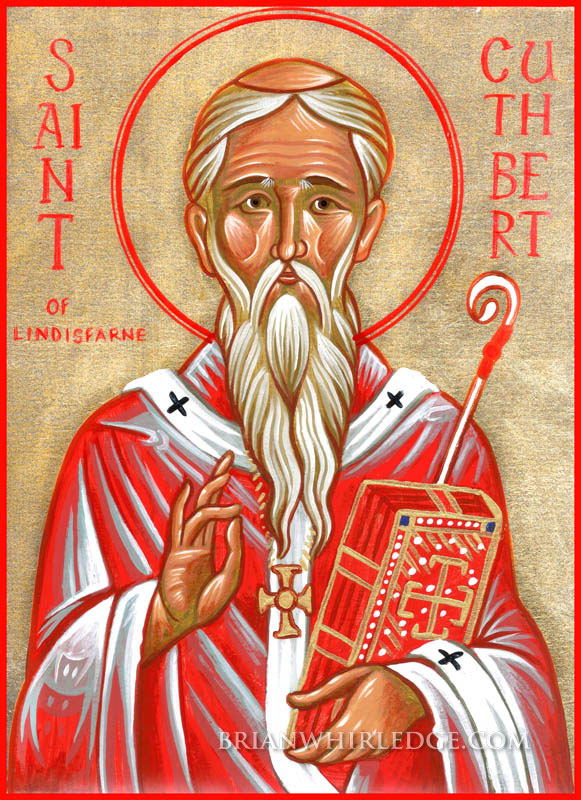
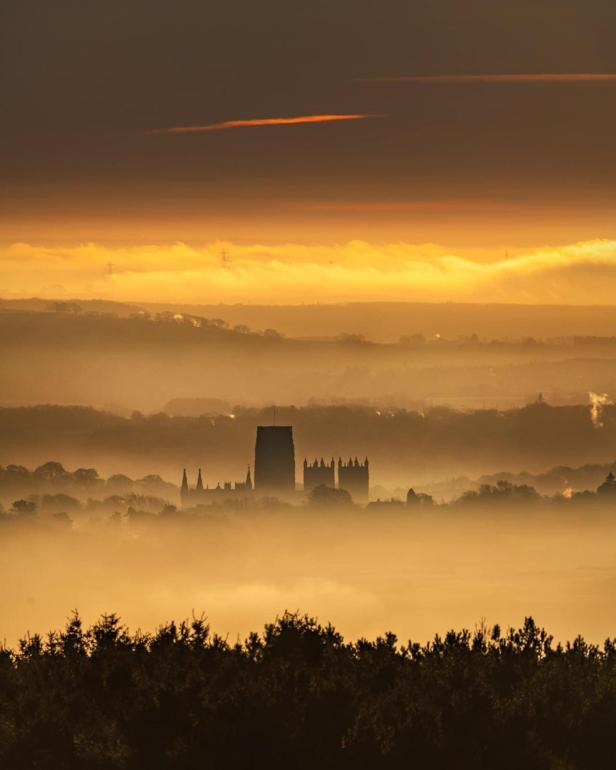
The 20 March celebrates Saint Cuthbert, the patron Saint of Northumberland whose remains are buried in Durham Cathedral – one of my favourite places.
But who is Saint Cuthbert?
Cuthbert was born around 633-635 at Hruringaham, near Lauderdale in the Scottish Borders. When he was about 16, he was looking after sheep in the hills and saw a vision of angels guiding a shining soul to heaven. He later learned that this happened at the exact moment that Aidan, Bishop of Lindisfarne (Holy Island), died. Cuthbert realised this was a sign from God and decided to become a monk. He joined the monastery at Mailros (Melrose) Abbey.
Cuthbert travelled around Northumbria preaching and became known for miracles of healing. He spent his days working and his nights at prayer, and his reputation as a holy man grew. In 664 Cuthbert was made Prior of the monastery on Lindisfarne.
Cuthbert was an extraordinary man of prayer. Bede tells us how he would pray all night in the sea and he longed for nothing more than an eremitical life in which he would live for prayer alone. And as a result, God used Cuthbert’s life in remarkable ways. He led countless people to faith; he healed the sick and fed the hungry and on one occasion we are told he was even able to change the direction of the wind to save a village from fire.
In 676 Cuthbert decided to become a hermit, someone who lives alone to be closer to God. He moved to a remote island near Lindisfarne called Inner Farne. He stayed there until 684, when Archbishop Theodore, hearing of his holiness, made him Bishop of Hexham. Cuthbert did not want to accept, preferring to be a hermit, but eventually agreed.
Cuthbert swapped roles with Bishop Eata, becoming Bishop of Lindisfarne instead of Hexham. He travelled around the region teaching and helping the poor, but continued to live a very simple life, as if he was still in the monastery. Only three years later in 686 Cuthbert realised his health was failing. He resigned as Bishop and returned to his hermitage on Inner Farne. He died on his beloved island on 20th March 687.
The monks brought his body back to Lindisfarne and buried it inside the church. Pilgrims began visiting and reported miracles of healing, a sure sign of Cuthbert’s holiness. Twelve years later, the monks decided to move Cuthbert’s remains to a new, small casket, which could be displayed above ground. But when they opened his coffin they were amazed to find, instead of bones, his body intact and undecayed – a sign of great sainthood. Pilgrims flocked to visit Cuthbert’s shrine and his fame spread far and wide.
In 875, following years of attacks by Viking raiders, the monks decided to abandon the Lindisfarne monastery. Taking Saint Cuthbert’s body, together with some other relics and treasures, they moved to the mainland and spent the next 120 years travelling across the region in search of a new home. They stayed in Chester-le-Street for 100 years, but, when danger threatened again, they moved to Ripon before finally settling in Durham Cathedral in 995.
Legend tells us the decision to settle at Durham was made by Cuthbert himself. While on the road the cart carrying Cuthbert’s coffin stopped and would not move. One of the monks received a vision telling him Saint Cuthbert wanted to go to ‘Dun Holm’ (Durham). The monks did not know where this was, but then overheard a conversation between two milkmaids. One had lost her cow, and the other told her it had been seen at Dun Holm. The monks followed the milkmaid: she found her cow, and they found a new, safe home.
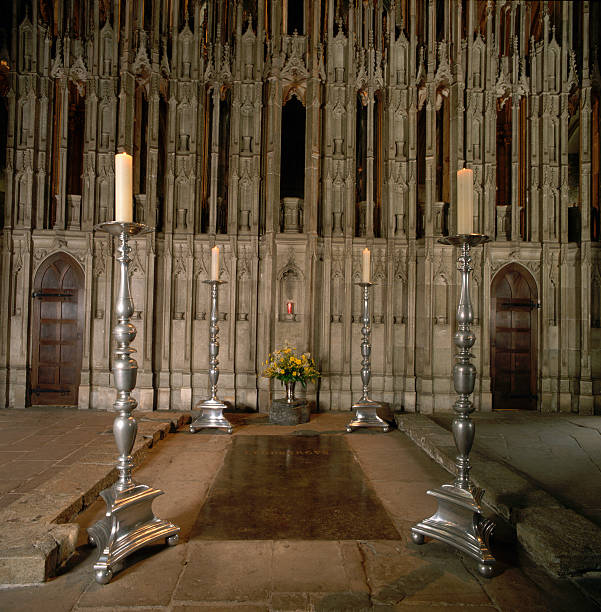 Cuthbert became England’s most important early medieval saint, and a key figure in the religious and political life of the Kingdom of Northumbria. Kings, princes and nobles offered gifts, and looked for Cuthbert’s favour before going into battle. People were eager to please Cuthbert and gain his protection, perhaps by visiting Durham on pilgrimage, or giving gifts to the shrine.
Over time Cuthbert’s celebrity waned, particularly after the Reformation, but he continues to hold a special place in the hearts of the people of the North East as ‘their’ saint.
A Prayer For Saint Cuthbert
Almighty God,
who called your servant Cuthbert from following the flock
to follow your Son and to be a shepherd of your people:
in your mercy, grant that we, following his example,
may bring those who are lost home to your fold;
through Jesus Christ your Son our Lord,
who is alive and reigns with you,
in the unity of the Holy Spirit,
one God, now and for ever.
Amen.
Revd Paul A. Carr and extracts from Durham Cathedral website
 revPACman