
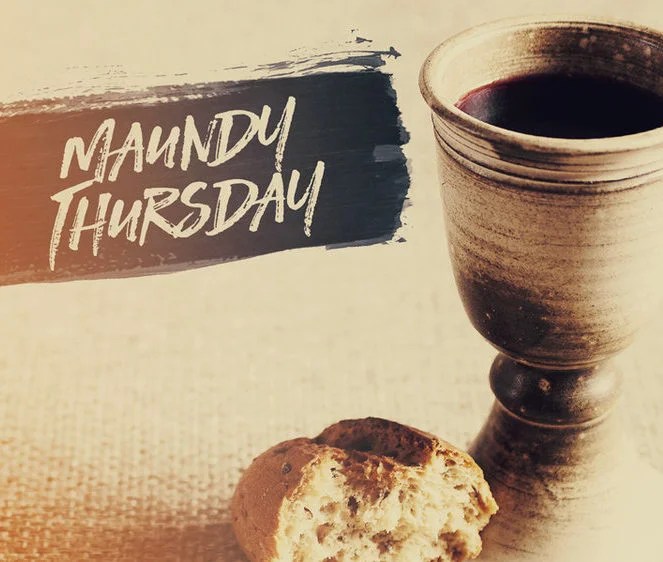
This is a copy of my talk given at Saint Luke’s and Saint Stephen’s in the Anglican Church of Paphos on Maundy Thursday 2024.
Prayer
Heavenly Father
I thank You for Your word
By the power of the Holy Spirit
May You speak to my heart
And change my life
In the precious name of Jesus I pray
Amen.
And so, we find ourselves, once again, on this Maundy Thursday thinking more deeply about what took place at ‘The Last Supper.’ A meal instituted by Jesus on the Passover Feast – the most sacred of all Jewish festivals.
The Passover commemorates, as we read in Exodus 12, the night God ‘passed over’ the Israelite houses – where the blood of a lamb had been sprinkled on the door posts and lintel – and spared the lives of their first-born children. It remembers, also, their deliverance from slavery in Egypt. It commemorates that, within God’s plans and purposes, his chosen people will be delivered from bondage and freed to live in the Promised Land.
Because the Passover is a meal of commemoration, they ate the same meal their forefathers did. Before the feast is eaten, a young boy asks the traditional question: Father, what does this mean?
The patriarch of the family then begins to tell the story of the night the Angel of the Lord passed over the firstborn of the Children of Israel. He tells the history of the Exodus and the glorious liberation of their ancestors – their ‘salvation’ history.
And in that upper room, with those two simple elements of bread and wine, Jesus explained to his disciples the deeper meaning of the festival and, in doing so, related the Passover meal, and its historic, symbolic and spiritual significance, with his own journey to the cross and so the Passover, for the Christian, became a meal of remembrance and thanksgiving.
It’s interesting to note that Jesus memorialises his death through bread and wine – not his life, or his miracles, nor his teaching, but his death.
Jesus wants us to remember not only how he died, but also why he died. In Luke’s account of the last supper, ch22, he writes that the disciples began to argue about who would be the greatest. It was an ongoing debate, wasn’t it? Who would sit at Jesus’ right hand, left hand …?
Jesus knew there was a competitive spirit in the hearts of the disciples, but it was through his actions, rather than his words, that Jesus gave them a lesson in humility as he chose to put on a towel, pick up a basin of water and wash their feet and, in doing so, rebuked their self-centredness, selfishness and pride.
Although this was a customary thing to do when people came round to dinner – it was a job usually given to a servant. Imagine the shock when it was Jesus who began to do this.
And, in doing this, Jesus was breaking two long held traditions: taking off his cloak – which was a command for the feast – and doing a servant’s work. We know Jesus did this because he wanted to show his true humility as a servant. But have you ever wondered what prompted Jesus to do this? Former Archbishop William Temple suggests that Jesus was acting out a parable rather than teaching one.
Peter, as ever, was the one who dared speak out his innermost thoughts. I’m sure the other disciples felt the same way but Peter, with that impetuous nature of his, was always able to say what others didn’t dare, vs8, You shall never wash my feet. Peter didn’t really understand what Jesus was doing but, after a rebuke from the Lord, Peter responds, OK, you can wash me but not just my feet, my hands and my head as well.
It says a great deal about Jesus’ love and forgiveness that he was able to wash Judas’ feet, even though he knew he was going to be betrayed by him. The King of heaven kneels and washes and anoints the feet of his friends and betrayer and, in doing this, Jesus demonstrates his willingness to exercise his power and authority in absolute submission and service to those he loves. I’m sure the argument about who would be the greatest ended there and then! C.S. Lewis once said that:
Humility is not thinking mainly of yourself: it is simply not thinking about yourself at all.
I know how much I, like those disciples, desperately need a lesson in humility. I’ve no doubt the disciples would have been willing to wash Jesus’ feet, but each other’s? Probably not!
Jesus became a servant so that we, in turn, may bend our knees in humble service to others. I don’t believe we can be spiritually blessed if we miss this most important aspect of our faith.
Sharing in bread and wine commemorates all that Jesus said we should do in that upper room. The ultimate reminder of servanthood, surrender and sacrifice that empowers us to: live and work to his praise and glory.
I don’t know about you, but I need that something extra to enable me to live and work to his praise and glory. I need that something extra to help me to cope with the rigours of life. I need that something extra that puts my own feelings and my own pride to one side. I need that something extra that puts my life into its true perspective. Because – and I can only speak for myself here:
- My heart isn’t big enough to forgive those who hurt me.
- My heart isn’t big enough to forgive those who cause me grief and upset.
- My heart isn’t big enough to absorb all the pain around me in our parish, community, Diocese, world …
Remembering the dying love of Jesus on the cross, for me, gives me that something extra. The remembrance of Jesus’ broken body and shed blood provides an opportunity for my personal healing and for the Lord to put right what is wrong in my heart and in my life. And if it’s true for me I’m sure it’s true for you, too.
And it’s through our participation in the Lord’s Supper, of eating bread and drinking wine, that the Holy Spirit nourishes our souls and bodies and we are formed and empowered to be like him: not only to follow Jesus’ example of humble service one to another; but, more importantly, to take up our own cross as we commit ourselves to that lonely road which leads us to paying the ultimate price for love.
In closing … remembering Jesus’ broken body and shed blood:
- Means that we are willing to take on his life of love, of service and of sacrifice.
- Encourages us to become servant hearted people, so that we become more effective in our mission as the Body of Christ in the world.
- Reminds us of the full extent of Jesus’ love.
In the upper room, Jesus gave his disciples a new commandment that they should love one another, and he prayed that they might be one and each one of us should pray that for the churches here in Paphos.
May each one of us, on this most special of days/evenings, dedicate ourselves afresh to His service as stewards of the mysteries of God and ministers of His grace.
COPYRIGHT DISCLAIMER: The text contained in this sermon is solely owned by its author, Revd Paul A. Carr. The reproduction, or distribution of this message, or any portion of it, should include the author’s name.
 revPACman