

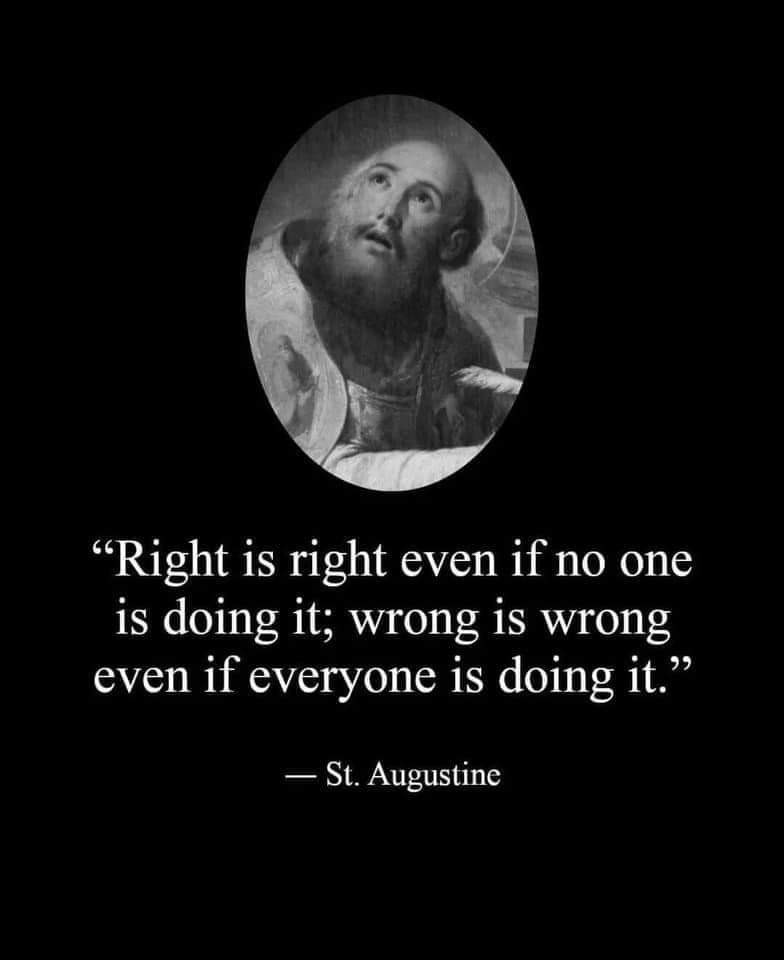
On 28 August the Church remembers Aurelius Augustinus Hipponensis (354-430), better known as Augustine of Hippo. He was a Bishop, philosopher, theologian, mystic, poet, pastor, preacher and teacher of the faith. He is the patron saint of brewers, printers, theologians, and a number of cities and dioceses.
But who was Augustine of Hippo?
Born in Thagaste, North Africa, of a pagan father and a Christian mother, Augustine was raised as a Christian, but not baptized. He initially studied rhetoric at Carthage, North Africa before moving to Rome to study philosophy. His study of philosophy and especially of Manicheaism led him to renounce his Christian faith.
Non-exclusive cohabitation (concubinage) was an accepted way of life and for 15 years Augustine lived with a woman (whose name has not been recorded) and together they had a child, a son called Adeodatus who later died aged 15.
Augustine taught rhetoric and grammar at Carthage before concentrating on philosophy. He was always seeking to break free from his mother’s zealous practice of the Christian faith, and in 383, in the middle of the night so to avoid her, Augustine left Carthage for Rome. Undeterred, his mother followed him, eventually catching up with him in Milan, where he had been appointed Professor of Rhetoric.
Augustine’s long journey back to Christianity is recorded in his Confessions, and reached a crux at Milan, where he heard the preaching of Ambrose. Augustine records how he reflected on the necessity of faith to achieve wisdom, and he tells of how he concluded that the authority on which faith rested was the Scriptures.
Less than ten years after his conversion, Augustine was a bishop. He spent the intervening time preparing for baptism, living a monastic life, researching and writing. In 388 Augustine returned to North Africa, and in 391 he travelled to Hippo intending to found a monastery. However, at Hippo he surprised himself by undergoing ordination. He was consecrated coadjutor (assistant) bishop in 395/6, taking control of the diocese in 397.
Augustine’s time as a bishop not only saw the production of many books but it was also a time of intense pastoral leadership. He worked unceasingly for the African Church, preaching daily, overseeing care for the poor, giving judgements in cases of dispute and giving much time to the formation and care of the clergy. He was also to be found at the church councils in Africa and beyond, and he was extremely active in the explanation and defence of the faith to those opposed to it.
Augustine was a complex character: a philosopher, theologian, mystic and poet, as well as a highly gifted pastor and preacher. Although often thought of as academic and condemnatory, Augustine came to believe that the Church was a place where outside influences and human weaknesses could be accommodated, and that the unity of the Church was more important than its purity.
In a time of uncertainty for the Empire, and consequently impoverishment for the poor, Augustine showed a deep care and practical concern for others. He used his own finances to feed the poor and is recorded as melting down church treasures to pay ransom for captives.
Augustine’s theology has been highly influential, although some parts bear the unmistakable stamp of fifth-century assumptions about society. The problems that he sought to explain and the way of thinking that he instigated affected both Christian and secular thought for centuries. He is the prime example of the African contribution to the spread of Christianity and doctrine throughout the history of the Church.
Augustine is remembered as the greatest of the Christian Church Fathers. More than any other writer, he developed what would become known as systematic theology, or an explanation of how Christianity fits into views of the universe, creation, and humankind’s relationship with God.
Augustine’s desire for God is evident throughout his work: The life of a Christian is an experience of an ever-deepening desire for God. What you desire you cannot, as yet, see; but the desire gives you the capacity, so that when you eventually see you are satisfied…Let us desire, my brothers and sisters, for we are to be filled. Commentary on First Epistle of John, IV, 6 You stir mankind to take pleasure in praising you, because you have made us for yourself, and our hearts are restless until they rest in you. Confessions, I.i
In 430, Augustine fell ill. He took to his bed and spent his days and nights praying the penitential psalms, which he asked to have written on the wall of his room.
Augustine died on August 28, as the Vandals invaded Hippo. Following Augustine’s death, his body was laid to rest in Hippo. It was later taken to Sardinia and moved to Pavia, Italy, where it now rests in the Basilica of San Pietro in Ciel d’Oro.
You Are Christ – Saint Augustine of Hippo
You are Christ,
my Holy Father,
my Tender God,
my Great King,
my Good Shepherd,
my Only Master,
my Best Helper,
my Most Beautiful and my Beloved,
my Living Bread,
my Priest Forever,
my Leader to my Country,
my True Light,
my Holy Sweetness,
my Straight Way,
my Excellent Wisdom,
my Pure Simplicity,
my Peaceful Harmony,
my Entire Protection,
my Good Portion,
my Everlasting Salvation.Christ Jesus, Sweet Lord,
why have I ever loved,
why in my whole life
have I ever desired anything except You,
Jesus my God?
Where was I when I was not in spirit with You?
Now, from this time forth,
do you, all my desires, grow hot,
and flow out upon the Lord Jesus:
run… you have been tardy until now;
hasten where you are going;
seek Whom you are seeking.
O, Jesus may he who loves You
not be an anathema;
may he who loves You
not be filled with bitterness.O, Sweet Jesus,
may every good feeling that is fitted for Your praise,
love You, delight in You, adore You!
God of my heart,
and my Portion, Christ Jesus,
may my heart faint away in spirit,
and may You be my Life within me!
May the live coal of Your Love
grow hot within my spirit
and break forth into a perfect fire;
may it burn incessantly on the altar of my heart;
may it glow in my innermost being;
may it blaze in hidden recesses of my soul;
and in the days of my consummation
may I be found consummated with You!Amen.
Revd Paul A. Carr & Extract from Saints on Earth: A biographical companion to Common Worship by John H Darch and Stuart K Burns
 revPACman