
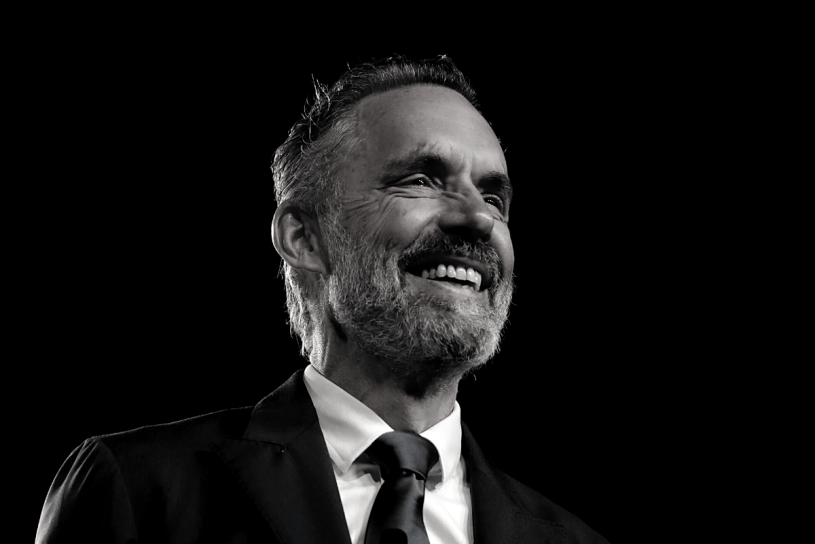
Meet the man who made philosophy go viral! Canadian Jordan Peterson, is a prominent figure known for his work as a clinical psychologist, professor, and author:
- His lectures get more views than Netflix shows
- Students wait hours to ask him questions
- His critics admit his ideas change lives
But Peterson’s biggest discovery came unexpectedly. Peterson noticed a pattern in his clinical practice. The patients who recovered fastest weren’t the ones who got the most therapy. They weren’t the ones who took the most medication. They shared ONE unexpected trait: They had a mission. A purpose beyond themselves.
Depression, Peterson found, isn’t just about brain chemistry. It’s about meaning. And he developed a protocol to find it. Here’s his six step protocol for a lifetime of happiness (reduced down from his 2018 book 12 Rules for Life: An Antidote to Chaos):
1. The Lobster Principle
Stand up straight. Pull your shoulders back. Sounds too simple? Science says otherwise. Just like lobsters, our posture changes our brain chemistry. When we stand tall, we feel powerful. When we feel powerful, we become powerful.
But there’s a deeper truth: Our bodies aren’t just carrying our minds. They’re creating our reality. Peterson found that physical confidence – like a lobster asserting its territory – actually rewires our neural pathways. Yet this only works when combined with the second principle:
2. The Self-Care Paradox
Watch someone with their dog. They never skip walks. Never forget meals. Never ignore signs of illness. Now watch how they treat themselves.
Peterson noticed this pattern over and over: We treat others better than ourselves. So … treat yourself like someone you’re responsible for helping. Imagine your best friend came to you with your exact situation. What would you tell them?
3. The Progress Protocol
Social media has created a comparison crisis. We measure our raw footage against everyone else’s highlight reel. Peterson’s antidote? A radical shift in perspective: Stop competing with others. Start competing with yourself: Track only two points:
- Who you were yesterday
- Who you are today
This simple shift transforms anxiety into growth. But first, you need to master your environment. Which leads us to:
4. The Order Algorithm
“Clean your room” became Peterson’s most famous phrase. Not because it’s profound. Because it’s true. Before you try to change the world, prove you can create order in your immediate environment. Start small. Start now.
Do this: Master what’s in front of you first. Your space. Your schedule. Your basic commitments.
Peterson found something fascinating: People who could create order in their rooms could eventually create order anywhere. But this requires facing what scares you:
5. The Courage Equation
Growth happens at the boundary between order and adventure. Peterson’s prescription? Face one fear each day …
- Try something new
- Have the difficult conversation
- Take that calculated risk you’ve been analysing
Each victory rewires your brain. Lastly:
6. The Story Solution
Your life isn’t just happening to you. It’s a story you’re telling yourself – and others. Peterson discovered something remarkable about people who share their journeys with the world. They don’t just heal faster. They create meaning from chaos. By articulating your struggles and victories, you transform:
- Random events into purpose
- Suffering into wisdom
- Experience to legacy
But in our digital age, this has even deeper implications: Your story can reach millions.
Every challenge you’ve faced, every insight you’ve gained — it’s not just experience. It’s valuable content that builds trust at scale. The primary benefits are psychological. But the other benefits?
The right people find you. Customers resonate with your mission. Hires believe in your vision. Your story becomes a beacon, attracting opportunities while you sleep. It’s the truest competitive advantage this generation can offer.
One rule for life that is missing from this list is ‘Spirituality’ which Peterson has spoken about at great length about in recent years. Whilst not admitting to being a Christian, Peterson describes himself as a pragmatic Christian who appreciates the moral and ethical frameworks of religion. This article in Christian Today might be an interesting read for you!
https://www.christiantoday.com/article/where.is.jordan.peterson.on.his.spiritual.journey/142286.htm
 revPACman