
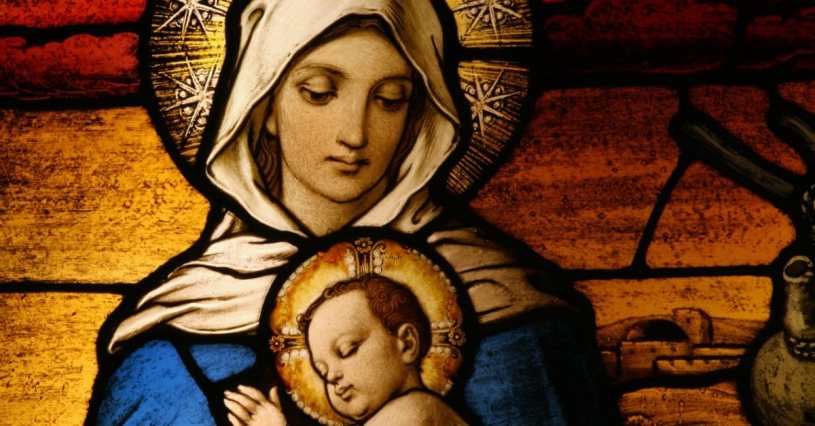
This is a copy of my talk given at Ayia Kyriaki and Saint Luke’s in the Anglican Church of Paphos on Sunday 22 December 2024. The Bible reading was Luke 1:39-55.
Prayer
Heavenly Father,
I thank You for Your word.
By the power of Your Holy Spirit,
May You speak to my heart,
And change my life.
In the precious name of Jesus I pray.
Amen.
Mary isn’t often preached about apart from at Christmas and/or Carol services. I believe Mary is one of history’s most misunderstood women. She’s been misunderstood by those who claim she was a perpetual, sinless virgin and by those who see her, rather than Jesus, as the mediator between God and men. But it’s easy to miss how remarkable a woman Mary was.
The birth of Jesus wouldn’t have happened without Mary – that’s an obvious statement, I know. But Mary is central to the story. And she was integral and influential in Jesus’ life not only because she gave birth to him. But also, because she, along with Joseph, did what parents do and raised Jesus, nurtured and cared for him, taught him what she knew about life and faith, walked alongside him in his ministry, and stood by him until the end.
In addition to being his mother, the gospels imply that Mary was also one of the most faithful followers of Jesus in his lifetime. And Mary’s story of faith offers so much for us to consider for our own lives as well. Mary’s willingness to say yes to God’s invitation, Mary’s trust in God, and Mary’s faithfulness in following through on her calling are a model for us all.
When the angel Gabriel informed Mary that she had found favour with God and to offer this invitation to become the mother of this special child, Mary had her questions. Of course, she did! “How can this be?” she asked.
Perhaps she also wondered, why me? Gabriel told her that her child would be the “Son of the Most High” and the heir to the throne of David. Perhaps Mary wondered why not choose someone with more economic, social, and political power? But she was chosen for a reason. And she demonstrates that reason through her faithfulness and her willingness to serve. “Nothing is impossible with God,” Gabriel tells Mary.
And her relative Elizabeth is proof. After years and years without children, Elizabeth thought she was barren, but now she’s six months pregnant. Mary has to see this for herself. When Mary arrives at Elizabeth’s house, baby John the Baptist leaps with excitement inside her womb. And Elizabeth, filled with the Holy Spirit, shouts for joy, and offers Mary a blessing.
In this moment, Elizabeth becomes a prophetess, a messenger for God, as she points to God’s creative and redemptive work that is unfolding before their eyes. Elizabeth has also responded to God’s call. And the Holy Spirit has given her the insight to perceive what is going on with Mary before Mary even has a chance to tell her.
In response, Mary offers what has become known as the Magnificat. It’s a song of praise to God. If this were a West End / Broadway musical, this song would be Mary’s big solo.
My soul magnifies the Lord, and my spirit rejoices in God my Saviour, for he has looked with favour on the lowliness of his servant. Surely, from now on all generations will call me blessed; for the Mighty One has done great things for me, and holy is his name.
She goes on to sing about God’s mercy. And she sings about God’s power to overturn the status quo – confronting the proud; bringing down the powerful and lifting up the lowly; feeding the hungry and sending the rich away empty. All signs that God has once again remembered the promise made to Abraham and his descendants.
In this moment, like Elizabeth, Mary also becomes a prophetess. Her proclamations are reminiscent of many of the biblical prophets who came before her. And her prophetic message serves the purpose of reminding all who hear it that God has remembered those covenantal promises He made.
It’s in the past tense to remind all who hear it that God’s work has already begun. God has and will continue to work with and through humanity to bring about redemption, and healing, and the righting of the world’s wrongs.
Mary’s prophetic song provides a sort of overture to the Gospel of Luke. It lays foundation of hope that yet more can and will be done to bring us closer to the Reign of God and the world as it should be.
And, as we know, the rest of the gospel illustrates how Jesus lived toward that vision and enacted God’s saving power – through his life, death, and resurrection; through teaching, healing, forgiving, caring, and calling us all into right and loving relationship with God and with one another. And the gospel proclaims that the Reign of God is not ushered in by a violent overthrow of the powers that be, not by some dramatic and otherworldly toppling of the world as we know it.
But, instead, the Reign of God is revealed to us in the life of the one we call the Prince of Peace – not a conquering hero, but a servant and a teacher, who entered the world in the way we all do – as an infant in need of care and nurture.
The story of Jesus’ birth reminds us that in our vulnerability, in our fragile humanity, there is such strength, power, and potential. God was working in and through Jesus to bring us closer to a just and peaceful world. And God is still working in and through us. The Prince of Peace, called us to be peacemakers too. And we are all called to be justice-seekers because without justice, there can be no true peace.
Biblical justice, however, is not about punishment. The biblical prophets speak instead about restorative and distributive justice. Mary’s song, though it might sound a little harsh, is not really about punishing individual people – the proud, the powerful, the rich.
Instead, it’s about reordering the world, so pride is not our goal; so some don’t wield all the power over others; so there are no longer rich and poor, but a world where everyone has enough. It’s an ambitious vision to be sure. And some days it can feel like we are still so very far away.
How can we imagine a just and peaceful world when there is still so much injustice and violence? What do we do about hate in its many forms? What do we do about the deep divisions between people? How do we work together to take better care of our earth?
We still have so many unresolved issues and so much work to do. We still face many of the same human struggles as the people who lived at the time of Mary and Jesus. And yet, they had hope.
Both Mary and Jesus demonstrated hope and faith, even in the midst of difficulty and uncertainty. And they drew upon the hope of their ancestors. If they could do it, why not us? If Mary could take seriously Gabriel’s message that “nothing is impossible with God,” then why not us?
The season of Advent invites us into this hope. Advent also invites us to consider how we too, like Mary, can bear God’s love into the world. And Advent invites us to consider how we are called to be peacemakers – because peace on earth can’t happen without our participation.
And I do think that in order to work for outer peace in the world, interpersonal peace, we also need to find our own inner peace. We need to find our grounding, our centre, in that peace of God that surpasses all human understanding. We need to embrace those spiritual practices that nurture us and bring us peace.
I like to imagine Mary a little later on in her pregnancy, maybe after returning from her visit to Elizabeth, before the journey to Bethlehem – sitting by a warm fire, maybe knitting or weaving some swaddling clothes, sipping a cup of tea, humming a lullaby, and contemplating the coming birth of her child – her expectant joy and hopeful anticipation – pondering who he will be, how he might grow, what light and love he might bring into the world.
And so, one of my prayers for you this Christmas is that you may find some rest – even if only for a few minutes here and there and be refreshed and renewed by the deep and sustaining peace of Christ.
Perhaps, during this Christmas week, we can all create time to meet faithful Mary in a moment of peaceful rest – to remember her story and ponder with her what is yet to come. And, as we do, may the faith, hope, peace, and joy within us grow as we consider what new love and light, we are called to bring forth into the world this Christmas.
Mary’s willingness to put everything to one side in order to allow the King of heaven to have His way in her life is one of the most important lessons we could ever learn. May I encourage each of us to ask the Lord to give us a spirit of hope this Christmas. A hope that can change and transform the hearts and lives of ordinary people like Mary, like me and like you.
May the joy of the angels,
the eagerness of the shepherds,
the perseverance of the wise men,
the obedience of Joseph and Mary,
and the peace of the Christ child
be yours this Christmas;
and the blessing of God almighty,
the Father, the Son, and the Holy Spirit,
be among you and remain with you always.
Amen.
COPYRIGHT DISCLAIMER The text contained in this sermon (except where stated) is solely owned by its author, Revd Paul A. Carr. The reproduction, or distribution of this message, or any portion of it, should include the author’s name.
 revPACman