
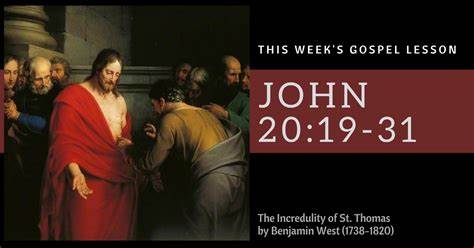
This is a copy of my talk given at Ayia Kyriaki and Saint Luke’s in the Anglican Church of Paphos on Sunday 27 April 2025. The Bible reading was John 20:19-31.
Prayer
Heavenly Father,
I thank You for Your word.
By the power of Your Holy Spirit,
May You speak to my heart,
And change my life.
In the precious name of Jesus I pray.
Amen.
Introduction
Think again of what it would have been like for those first disciples, gathered together in the upper room that first Easter evening, which is when today’s Gospel reading begins. Think of what they witnessed in the days leading up to this point: there was that emotional Thursday evening, when Jesus washed the disciples’ feet, and shared a last supper with them.
There was his agony in the garden, when those same disciples fell asleep as Jesus prayed. There was the betrayal by Judas, one of their own, and Jesus’ arrest. There was the denial by Peter, the crowds shouting for Jesus to be crucified. His trial, his torture, his crucifixion and then his burial in the tomb. And now, two days later, stories that the tomb was empty and Jesus was raised from the dead.
Just imagine the swirl of emotions those disciples must have been feeling when Jesus came and stood among them that evening! They felt joy, of course. But also, sadness, I think, over what Jesus had endured. I strongly suspect, they felt guilt, too, over deserting Jesus in his hour of need. And probably confusion over what his resurrection meant. They would have been fearful – would they be arrested now? Would they be accused of stealing the body? Would anyone believe them if they said Jesus had risen from the dead?
Peace Be With You
And in the midst of all that joy and sadness and confusion and fear and guilt, Jesus showed those frightened disciples the same grace and mercy and forgiveness and love that he always showed. He stood among them and said the right thing at the right time when he simply said: “Peace be with you.” And then, to ease their doubts, he showed them his hands and side. No wonder the disciples rejoiced to see him! Not only was Jesus alive, he had also forgiven them for all that they had done – and not done – over these last dramatic days.
We often read today’s gospel and focus on Thomas, the doubting disciple, who needed to put his finger in the marks of the nails before he would believe. But this story is really about all of those fear-filled disciples, trembling behind that locked door and wondering what it all means.
And this story is also about how Jesus comes to us, in the midst of our doubts and fears and sin and guilt, in the midst of trying to live a life worthy of our Lord and Saviour; struggling with doubt, weighed down with fear, and constantly falling short of what we know he expects from us, to offer each and every one of us those simple words of grace, and mercy, and forgiveness: “Peace be with you.”
This gospel reading is really about the peace which surpasses all understanding; the peace which the world cannot give; the peace that can only come from our risen Lord; the peace that comes when we most need it.
Think back to a time in your life when you feel as though you have truly disappointed God. And now, imagine Jesus showing up at that very moment, and saying: “Peace be with you.” That is what our Lord does for each and every one of us. That, too, is the miracle of Easter.
As the Father Has Sent Me …
But today’s gospel reading is also about the ways in which we are called to share that peace and that joy, with a world filled with doubt and fear. Jesus did not join his disciples in the upper room simply to celebrate his resurrection. He joined them to give them the gift of the Holy Spirit, and to send them to the world to continue his mission. “As the Father has sent me,” Jesus said to them, and to us, “so I send you.”
The word “Apostle” literally means one who is sent. The word “Disciple,” on the other hand, literally means one who learns. The disciples have learned from Jesus many things through his words and his example. He has taught them about the Kingdom of God, and about our Heavenly Father’s purpose for them and for the world.
Now, these disciples are becoming apostles and Jesus sends his disciples into the world to be his apostles. And he sends us out into the world in that same way. We are the sent-out people of God, with a mission that comes straight from our crucified and risen Messiah.
Receive the Holy Spirit
But Jesus doesn’t just tell us to do this. He helps us to do this. That, too, is the miracle of the resurrection. After he said to those first apostles, “As the Father has sent me, so I send you,” Jesus breathed on them and said: “Receive the Holy Spirit. If you forgive anyone his sins, they are forgiven; if you do not forgive them, they are not forgiven.”
When Jesus breathed on them, I can imagine those disciples thinking back to the creation story in Genesis: when God took dust from the ground, formed Adam from the dust, and then breathed into him the breath of life. As the Father did at the beginning, so the Son did to those first disciples.
It is not enough for Jesus that he conquered death through the great triumph of Easter. Now he wants to breathe this new life into you and I; he wants to share that new life with us. And then? Then he wants us to go out and share that new life with others. To share that new life with a world that is suffocated by anxiety and fear. He wants to breathe new life into this world through us. “As the Father has sent me, so I send you.”
Jesus wants us to go into a world in the grip of death, and breathe unto it new life. And our world needs that new life, doesn’t it? And if we wonder where it will come from, it will come from us. We are the ones continuing Jesus’ mission. We are now the body of Christ in the world.
We are God’s plan to bring new life into a dying world, until the day that Jesus returns again. Our words, our deeds, our hope, our faith, our love, our witness in our daily lives, our acts of love to others; all of this done in Jesus’ name with the help of the Holy Spirit; all this is how the world catches a glimpse of our risen Lord. That is what it means to be a disciple of Jesus. So that’s what those first apostles did, isn’t it? They ran out and shared their joy with the world? Well, not exactly … not right away.
Doubting Thomas!
A week after this story takes place, the first Sunday after Easter (today’s designated day in the Lectionary) we find those disciples back in the upper room; the door locked again. Have they taken any notice of what Jesus had said to them? This time, he’s going to give them a pep-talk, and tell them to get out there and do what he asked them to do.
The first thing Jesus says to them is – surprise, surprise: “Peace be with you.” Then, he turns to Thomas. Now, for some reason, Thomas wasn’t present the week before when Jesus first appeared to the other disciples. Have you ever wondered why? Was he unwell? Was he too fearful to go to the house? Was he about to give up on being a follower of Jesus?
We don’t know, but what we do know is that when Thomas returned, the disciples told him that Jesus had appeared to them. But Thomas didn’t believe: “Unless I see the nail marks in his hands, and put my finger where the nails were, and put my hand into his side, I will not believe it.” You can’t get more sceptical than that. I will not believe, unless I see visible proof.
Why does Thomas refuse to believe? He would have been shattered on Good Friday when Jesus died. But he wasn’t about to succumb to fantasy. Jesus had died. No one in their right minds would doubt it when the Romans said a prisoner was dead. Thomas knew how the world worked. Dead was dead, and that was it. That’s how our world sees Jesus’ resurrection today. Nice idea, but it didn’t really happen.
Have you ever doubted? Often, we’re afraid to face our doubts because we’re afraid of what we might find. We’re afraid of what others might think. People might find out how weak our faith really is, so we keep our doubts to ourselves. And yet, our doubts don’t go away – they’re always there, and our doubts slowly eat away at our faith, until we believe in Jesus less and less, and we become more and more sceptical, like Thomas.
So, what does Jesus do when he appears to Thomas? Again, Jesus shows patience and forgiveness and mercy and says: “Put your fingers here and see my hands. Reach out your hand and put it in my side. Do not doubt but believe.” Thomas responded: “My Lord and my God.” In verse 29, Jesus says to Thomas: “Because you have seen me, you have believed. Blessed are those who have not seen me and yet have believed.”
Conclusion
In the midst of our doubts and fears, in the midst of our sin and failings, our crucified and risen Lord and Saviour comes to us and says: “Peace be with you.” He comes to us and says, “Do not doubt, but believe.” Jesus forgives us, breathes new life into us, and offers us the gift of new life and the promise of the Holy Spirit.
Again and again, our risen Lord reminds us of our mission; to go and share the peace and the joy and the hope of this new life, with our world that struggles to find peace, joy or hope. The risen Jesus comes to us to give us peace, to give us new life, to forgive our sin, and to gently remind us not to doubt but to believe. Jesus invites us to go in peace, to love and to serve our risen Lord.
COPYRIGHT DISCLAIMER The text contained in this sermon (except where stated) is solely owned by its author, Revd Paul A. Carr. The reproduction, or distribution of this message, or any portion of it, should include the author’s name.
 revPACman