
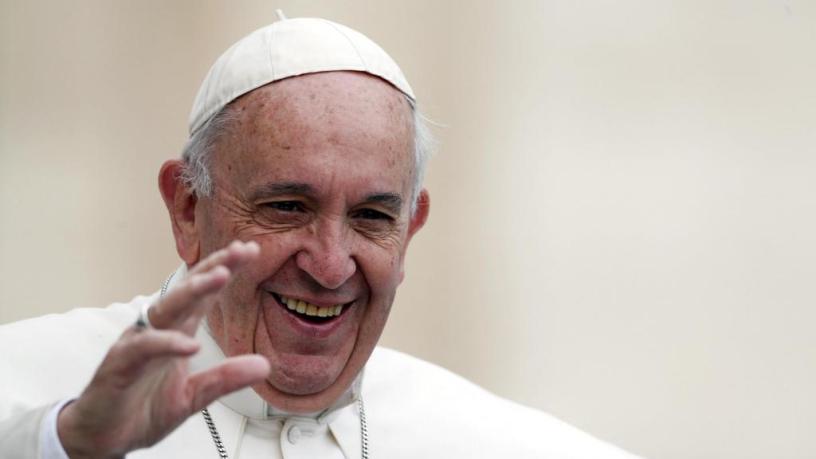
Pope Francis has died at the age of 88. He was the Bishop of Rome from 2013 to 2025 in a papacy characterised by a dedication to the marginalised and a deep care for God’s creation. Though it was not free from criticism and controversy, it was one that will leave a lasting impact on Catholics around the world.
Yet his papacy was not without its critics, including those who were delighted by his election but became frustrated by a lack of progress on key issues. He seemed unable to ensure the Catholic Church had a robust safeguarding system to protect children against sexual abuse by priests. Although he promoted a few women to be Vatican officials, he did not budge on women’s ordination, stalling even on allowing women to become deacons. And while he was liked for his message of peace, many thought his attempts to improve Vatican relations with the Beijing regime did nothing to help Christians who fell foul of China’s oppression of religion.
A Traditional Pope
Pope Francis was born Jorge Mario Bergoglio in 1936 in Buenos Aires, the child of an Italian migrant family. Before joining the Jesuit order and training for the priesthood, he had worked as a bouncer, a cleaner and a chemist, and developed a passion for football and the tango. After he was appointed provincial (leader) of the Argentinian Jesuits at the age of 36, in 1973, his time in office led to conflict with fellow priests and leaders of the order in Rome, and he was stripped of his responsibilities.
These values came to characterise his papacy, after his election as pope by his fellow cardinals in 2013, following the shock resignation of Pope Benedict XVI. He took the papal name of Francis, to indicate that, like St Francis of Assisi, his priorities were the poor and God’s creation.
He inherited a Catholic Church in turmoil, with scandals over money, the Vatican Bank, and over child sexual abuse by priests. He set up a council of cardinal advisers to examine the governance of the Catholic Church. But his most significant change came with his growing use of synods, calling them to further engage the laity and bishops around the world in the Catholic Church’s decision-making. His synods of 2023 and 2024, examining the future structure of the Church, gave lay people unprecedented voting powers during the sessions.
There had been similar delight from some and raised eyebrows from Conservatives when he had been asked about gay people early on in his pontificate and replied: “If a person is gay and seeks the Lord and has goodwill, who am I to judge that person?” He also spoke out against the death penalty regularly, committing the church to its abolition.
But Pope Francis really made his mark through his urging a rethink on the environment. His document, ‘Laudato Si’, published in 2015, was a critique of consumerism, environmental degradation and global warming, and urged people to take “swift and unified global action” to care for what he called “our common home” – the planet. His other writings, on his life, on spirituality, and on the Nativity, were bestsellers.
But it was in relations with China that Francis proved most controversial. In 2018, the Chinese government and the Vatican signed an agreement that allowed Beijing to have more control over the underground Church – the one that comes under the jurisdiction of Rome. The Vatican was also supposed to secure more say in appointing bishops in the state-approved Patriotic Catholic Church. But in practice it meant that the Chinese government secured power over a religion, sanctioned by the Vatican. The pact was later renewed several times. But freedom of religion remained blocked for huge numbers of Christians in China.
Legacy
Hopes that Pope Francis’ would deal effectively with child sexual abuse in the Church were not fulfilled, despite his setting up early in his pontificate an advisory body to initiate reforms. But key members resigned and the scandals kept coming, including about clerics that Francis had himself known.
Yet for all that, the man from Argentina, from what he himself called the periphery, had an uncanny ability to speak the language of people across the world and reconnect many to their faith. It was his greatest gift as pope.
 revPACman