
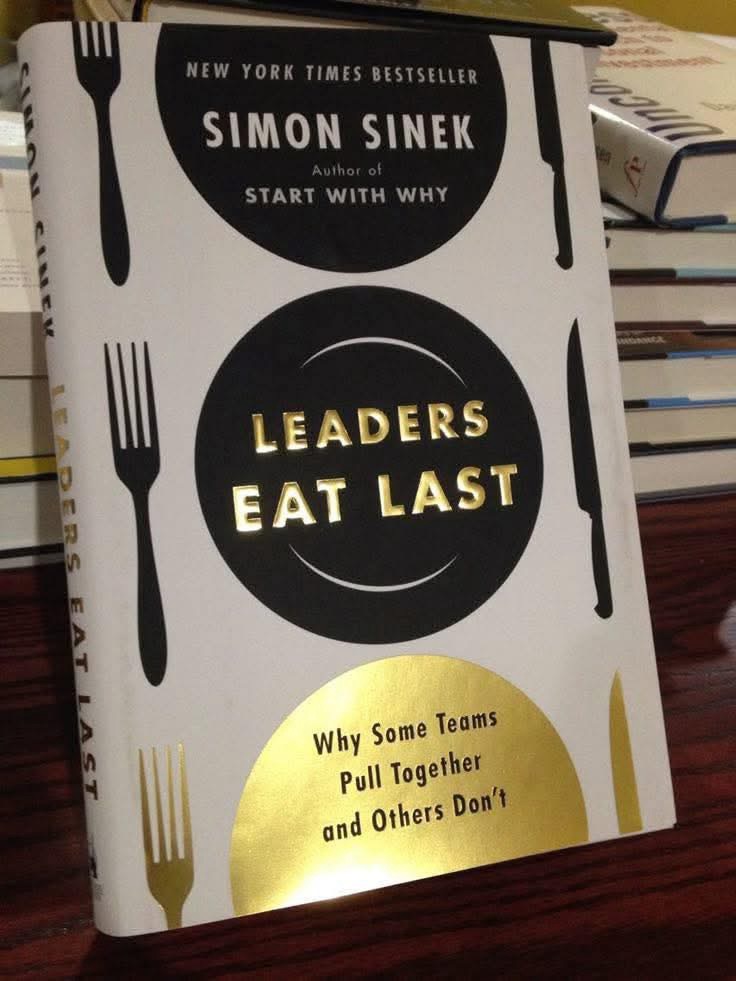
The best leaders aren’t the ones who demand authority, chase titles, or sit at the head of the table. They are the ones who stay when things get tough, who protect their people, and who, quite literally, eat last.
Anything by Simon Sinek is worth reading and Leaders Eat Last is no exception – it’s a revelation on what it truly means to lead. It strips leadership down to its most human form: service, trust, and sacrifice.
Here are a few lessons from the book:
- Safety Creates Strength
People don’t thrive under fear—they thrive when they feel safe. Sinek explains that the best leaders create a “Circle of Safety,” where individuals feel secure enough to take risks, speak up, and innovate without the fear of being punished or abandoned. A strong team is built on trust, not intimidation. - Leadership is a Responsibility, Not a Privilege
True leaders don’t seek power for personal gain; they take on the responsibility of ensuring their people are supported, protected, and empowered. Leadership is not about being served—it’s about serving others. - Trust is Earned Through Actions, Not Titles
Trust isn’t built overnight, and it certainly isn’t granted just because of a position. Sinek emphasizes that trust is formed when leaders consistently show up, stand by their people, and make decisions with integrity. Words mean little without action. - Sacrifice is the Mark of a Great Leader
The most respected leaders aren’t those who take the biggest piece of the pie—they are the ones who willingly go without so their team can thrive. They step up in difficult times, take responsibility when things go wrong, and prioritise their people over profits. - A Strong Culture Beats Short-Term Gains
Toxic workplaces chase short-term wins at the expense of long-term loyalty. Sinek argues that great leaders focus on building a culture where people feel valued and motivated, which ultimately leads to sustainable success. - Leadership is a Biological Imperative
Our brains are wired for connection, and leadership taps into our deepest human instincts. Sinek breaks down how chemicals like oxytocin and serotonin influence our behaviors, proving that great leadership is as much about biology as it is about strategy. - Courageous Leaders Go First
Leadership requires vulnerability. It means taking risks, being honest, and having the courage to make tough decisions. The best leaders lead by example, showing their team what it means to step up, even in the face of uncertainty.
GET THE BOOK HERE: https://amzn.to/4ifKGLO
 revPACman