
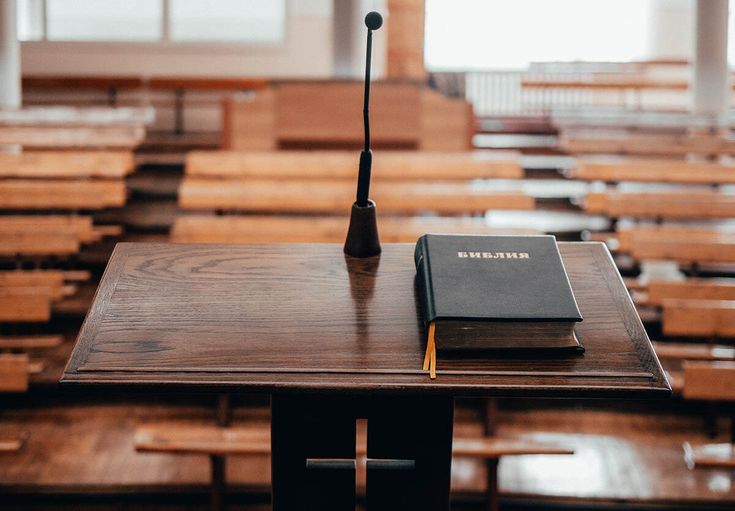
Bible Sunday is celebrated by many churches on 26 October this year – a day set aside to celebrate the gift of God’s word. This is a copy of a sermon provided by the UK Bible Society. based on Acts 8.26-40.
Introduction
You may be old enough to remember Skoda jokes. ‘How do you double the price of a Skoda? – Fill it with petrol!’ ‘Why do Skodas have rear window heaters? – To warm your hands when you’re pushing it.’ These days, we no longer joke about Skodas. Even young people think they’re cool. Skoda’s image has changed.
Not too long ago, being seen carrying a Bible was considered a bit of a joke, especially if you were a teenager and among your friends. But, increasingly, young people are saying ‘I’d like to have one of those’. The younger generation is rediscovering faith. They want to explore whether the Bible might have something to offer in a world of crisis and uncertainty.
In 2018, Bible Society commissioned YouGov to ask around 19,000 people in England and Wales about their perception of faith, church and the Bible. In 2024 they interviewed 13,000. The shift in attitude was remarkable. The 2018 research reflected exactly what we’ve all been told. The church is getting older. Young people don’t go. But Bible Society’s survey in 2024 revealed a turnaround: 16% of young adults are now saying that they go to church at least once a month. That was 4% in 2018. And if you poll just young men, it’s gone up to 21%.
45% of people in England and Wales now believe there is probably or definitely a God or a higher power. 37% say they pray at least monthly. One in three people would like to go to church if only they were invited. And one in four are interested in learning more about the Bible. Like Skoda, the Bible is no longer considered uncool. No wonder Bible Society called its 2024 research The Quiet Revival.
Something is shifting. But what is our role? How can we respond to the Quiet Revival? Let’s explore this through the story recorded in Acts 8 when a confident believer called Philip sat alongside a curious seeker from Ethiopia. The Ethiopian man represents the new openness we are witnessing in culture. Philip shows us how to respond. Who do you most identify with in this story? Are you the curious seeker, still trying to work out what all this is about? Or are you more like Philip, the confident believer, willing and able to help people make sense of the Bible?
1. THE CURIOUS SEEKER
Background
• The Ethiopian official in Acts 8 is clearly educated, successful and wealthy. He is riding his own chariot and reading a scroll. And yet he is looking for more.
• He has gone to Jerusalem to visit the temple. He seems to be on a spiritual quest; all his power and riches have failed to answer his deepest questions.
• But by the time Philip meets him, he is heading home despondent. He has tried what the world has to offer. That didn’t satisfy. He has tried what institutional religion seems to suggest as an alternative, and that didn’t make sense. He’s still searching. It is at this point that God brings Philip into the man’s life.
• The Ethiopian embodies what we are seeing the Quiet Revival. Increasingly, those coming down the road today are not cynical sceptics but spiritually open people asking honest questions. The Ethiopian wants God to be real and the Bible to make sense but he’s stuck. Similarly, Bible Society’s Quiet Revival research is telling us how many curious seekers are coming down the road in our cultural moment. They may not all be turning up at church but they are seeking. They want to know if there’s more to life than the narrative of secular humanism.
THINGS TO THINK ABOUT:
• The Ethiopian official had status and wealth but was still searching. Similarly, many young people today feel that their parents’ generation bought into a materialist, secular lie: that money and success can buy you happiness.
• Perhaps you feel like this curious seeker? You are not trying to be difficult but some things in the Bible don’t make sense. You need some help to discover more about God. Just like the Ethiopian man, its ok to admit we are struggling and reach out for help.
• If you are a curious seeker, or you are good friends with one, what would be a helpful next step for you? Perhaps take a copy of the Bible today. Or come on The Bible Course next time we run it. We would love to help you on your journey.
2. THE CONFIDENT BELIEVER
Spiritually open people need confident believers. This is where Philip comes in, someone who’ll sit next to them, not preach at them, not force things on them, but have relaxed, honest conversations about faith. Where are today’s Philips and Philippas who can come alongside those exploring faith and the Bible?
Philip shows us three values we need to embody if we are to be part of the Quiet Revival:
i. Open to the Spirit
The Spirit told Philip ‘Go to that chariot and stay near it’. Before that, Philip was in Samaria, busy in a church environment, and it was from that place that he felt the Spirit telling him to leave and go to the desert road. No further instructions given. Isn’t that annoying when God tells you to do things and you’re asking ‘Well, what will happen if I do that?’ Silence. Just do it. You’ll find out when you go. So he goes to the desert road. Can you imagine how stupid Philip must have felt standing around? But as he’s waiting, suddenly there’s the rumble of chariot wheels. And into the scene comes the very reason that God has brought Philip there: he loves this man who is coming down the road.
THINGS TO THINK ABOUT:
• There is a new spiritual openness. Something is shifting. But you won’t seize the moment, unless you are led by the Spirit and put yourself out there and become part of the journey for people who would like you to help them find the truth. Pray a simple prayer every morning: ‘Lord, show me who I can bless
today in Jesus’ name, and lead me to a curious seeker’.
• Am I staying indoors and keeping it safe and familiar? Or do I see it as a privilege to share the good news of Jesus with those who want to know?
• Would I be prepared to share the Bible with a young adult if, out of the blue, they asked me to tell them my favourite Bible story?
ii. Open to the Scriptures
The Ethiopian official happened to be reading from the prophet Isaiah. It must have been a surprise for Philip when he realized this man from a foreign land was reading a portion of his Bible. Perhaps we would be surprised to see who is interested in the Bible today. Bible sales are up and 34% of young people outside the church say they would like to understand the Bible for themselves. But are we ready to help them? Wouldn’t it have been awkward if God had gone to great lengths to get Philip to connect with this seeker and if, as the man showed Philip the passage, Philip had replied ‘Oh I’ve never read that before. No idea. Sorry, I don’t bother with the Old Testament. It’s too complicated’? Philip had to be ready. He was used to digging into the Scriptures.
THINGS TO THINK ABOUT:
• What might I do to grow more confident in sharing the Bible with people who are looking for answers?
• The ‘quiet revival’ means, people want to explore faith and need Christians to help them navigate the Bible. Philip shows the Ethiopian official how one passage in Isaiah plugs into a much bigger a story, by foretelling Jesus. Helping the spiritually open to connect different parts of the Bible is crucial.
• Christians are also called to study the Scriptures so they can help seekers to navigate difficult Bible passages. We don’t need to have all the answers, but we should be prepared for people who ask challenging questions.
• The Bible Course is a great way to become more confident in the Bible and to see how the whole story fits together and centers on Jesus. Why not run the course for your friends, family or small group to get equipped?
iii. Open to the Stranger
Philip and the Ethiopian official were nothing like each other. But Philip refused to withhold the very grace he himself had received, just because they were different. May God help us not to pull away from people who are different but to make a move towards them with the love of Jesus Christ that has come looking for us. Amazing things can happen when we do. According to church tradition, after Philip had baptized him, the Ethiopian official returned home and preached the message that he himself had come to believe. Today the Ethiopian Orthodox Church traces its heritage back to him.
Amazing things can happen when God’s people sit alongside curious seekers and have great conversations. Wouldn’t you want to be part of that?
Bible Plan – Readings and Reflections
This plan is designed to help you read the Bible for yourself. As you read the passages you’ll discover key stories, people and events that track the content of The Bible Course and help you prepare for each session.
We suggest you set aside around 15 minutes each day to read the passages and the accompanying reflection. If possible, try to find a regular time and a quiet space to do this. Ask God to help you understand his word and take notes if you are able to.

If you are interested in belonging to an #Anglican Church of #Paphos Home Group for Bible Study, Prayer, Friendship, Encouragement and to learn more about the Christian Faith, then put Wednesday 26 November from 2.00 – 4.00 pm in your diary when we will meet in #Pegeia. We are open to starting an evening group if daytime doesn’t suit everyone.
Please contact the parish deacon, Revd Lesley, for more information
P +357 99 912847 E revdlesley.acp@gmail.com
 revPACman