
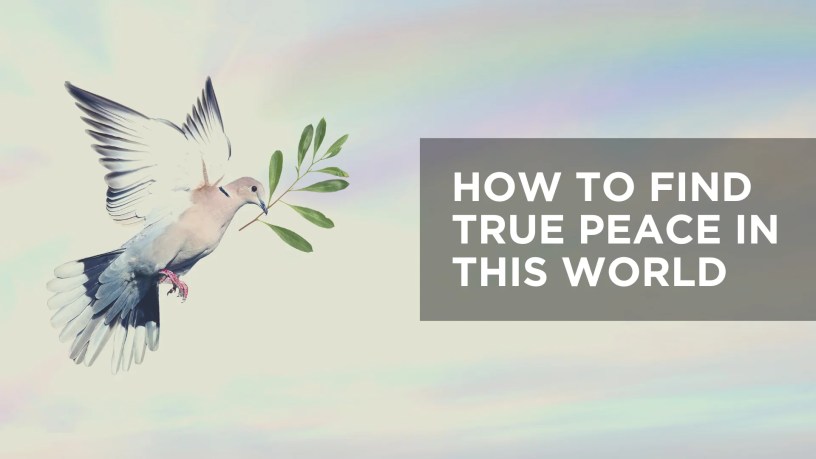
This is a copy of my talk given at Ayia Kyriaki (x2) and Saint Luke’s in the Anglican Church of Paphos on 9 November 2025 – Remembrance Sunday. The Bible Readings were Micah 4:1-5, Psalm 46:1-11, Romans 8:31-39, John 15:9-17.
Prayer
Heavenly Father,
I thank You for Your word.
By the power of Your Holy Spirit,
May You speak to my heart,
And change my life.
In the precious name of Jesus I pray.
Amen
Introduction
Some people believe that Remembrance Sunday is outdated. A religious practise which isn’t relevant in today’s world and should no longer be observed. Some even suggest that Remembrance Sunday glorifies war. But that misses the point of Remembrance Sunday altogether.
Remembrance Sunday is a day to thank God for the peace we enjoy and to remember those who gave their lives in the greatest sacrifice of all. We remember those who have been called upon to put themselves in ‘harm’s way’ today – whether that be in areas of conflict or in peace keeping commitments around our world.
Remembrance Sunday is a time of mixed emotions. There is thanksgiving for memories. And pride – and quite rightly some of it is national pride – for the courage of our armed forces. There is also pain, possibly anger, emptiness and much more besides when we recall the sacrifice of family and friends and remind ourselves of the death, destruction and suffering of war.
1. The End Of The Second World War
Of course, 2025 marks the 80th Anniversary of the end of the Second World War. WW2 was a war that touched every continent, involved millions of people and its legacy is still felt today. Many people laid down their lives in that terrible conflict – the most lethal and devastating conflict in history.
A harrowing statistic about the Second World War is that 22 million military personnel lost their lives, but even more incredible than that, is the fact that 28 million civilians lost their lives, too. And this doesn’t take into account the many millions who were disabled and maimed as a result of warfare and bombing and those who carry the emotional scars of a World at War. The Second World War had been a total war – in that it affected almost everyone. No one was immune from its impact. Whether it be the men and women called up to serve; families separated from each other; or people asked to take up new roles and skills to support the war effort. All had a part to play.
At the start, the outlook seemed bleak, the end distant, the outcome uncertain. But the Allied Forces kept faith that the cause was right. Yet the news of Victory in Europe (8 May 1945) provoked mixed emotions for those who had lost loved ones during the war, and for those worried about friends and family still serving (and fighting) overseas.
Whilst VE Day marked the beginning of the end of WW2, millions were still involved in the fighting that raged in the Far East and many troops stationed in Europe were redeployed instead of going home. Victory over Japan (VJ Day) on 15 August 1945, marked the Japanese surrender, which ended the Second World War.
In this 80th anniversary year we remember the struggles that the wartime generation endured. A global conflict that sucked a whole generation into its violence and evil, of the courage and sacrifice of many, those who lost their lives and those who bore the scars, of those, who, with a vision of hope for a different future toiled through the hard work of forgiveness and reconciliation to create a new and lasting peace. The Second World War profoundly shaped our modern world, helping to foster global cooperation and establish institutions like the United Nations.
2. Act Justly and Love Mercy
The reading from Micah is an appropriate one for Remembrance Sunday as Micah speaks against a background of armed conflicts, having witnessed the effects of war first-hand. In 722 BC the Assyrians destroyed Samaria (in the North) and 20 years later attacked Jerusalem (in the South) only for the city to escape by a miracle. Micah lived through both of these events and appears to have been deeply affected by them.
Having witnessed the horrors of war, Micah denounces events of the past and the exploitation of the helpless. He decries the fallacy of human plans compared to the wisdom of God and His ways, and he rebukes the leaders and prophets who have led the people into this situation. The reading speaks of the new hope there will be when God’s rule comes, and God Himself will judge the disputes ‘for strong nations far and wide’. It is then, and only then, will the people beat their swords into ploughshares and their spears into pruning hooks.
Micah offers a future with fresh hope for the people of God and is clear that true peace can only come to the world when God’s rule reigns supreme. In 6:8 Micah explains that our role in this new world order is … to act justly and to love mercy and to walk humbly with your God.
We are to work hand in hand with God to bring about the peace which he describes. And in a world which desires peace, we do well to remember that true peace can only come when we follow God’s ways rather than try to engineer or create peace purely through diplomatic, political or military means. Politics, diplomacy and armed forces can be an important supporting element for peace, but true peace comes from God alone – and we pray the peace agreement in Gaza holds strong and we continue to pray for peace in Ukraine, Syria, Yemen, Iran. India, Pakistan … the list goes on!
We must understand the meaning of being a good neighbour in a tough neighbourhood, as our Lord taught us, and model that behaviour for others to see. Although she is not a Christian, a Palestinian-Israeli doctor who works in the ER in Be’er Sheva recently captured the true divide between us in a recent statement quoted in Haaretz. She said:
In the midst of all the blood and horror … I realized: the real divide is not between Arabs and Jews or Palestinians and Israelis. The actual divide is between those who believe that violence is the answer to this conflict and those who believe in saving lives. The divide is between those who believe it is OK to kill people for a higher purpose and those who believe that every human life is sacred.
But, there will come a time, as Romans 8 reminds us, when: … neither death, nor life, nor angels, nor rulers, nor things present, nor things to come, nor powers, nor height, nor depth, nor anything else in all creation, will be able to separate us from the love of God in Christ Jesus our Lord.
3. Asking Difficult Questions
Remembrance Sunday confronts us with some difficult questions. Inevitably there is always the question as to whether war is necessary in the first place. Wars happen as a result of what we humans do to one another. They come from human anger, resentment and greed.
Religion is often blamed for war – but doing away with religion would never stop wars. At the heart of war lies a willingness to kill other human beings because they are different to us, or because they have something we want. Nations would fight with, or without, a God who is often used to justify their actions.
However, if there was no religion we would have to stop the misplaced belief in war when people convince themselves that somehow God is on their side. They imagine the people they are fighting are not God’s children so it doesn’t matter how many of the other side are killed, the casualties which really matter are their own.
Looking into the face of evil and suffering challenges our faith in God. A Jewish survivor of Treblinka told how the Nazi’s kept a squad of Jewish slaves to clear out the gas chambers and bury the bodies. The Jewish prisoners had to open the doors of the gas chambers and drag the bodies to the grave. He said that sometimes they found children, still alive, clinging to their mothers. They strangled them before throwing them into the grave. People who visit Auschwitz say the thing that most shatters them most is not the eerie silence, but the pile of children’s shoes.
Some suffering is human in origin, and we need to know that there are consequences of our actions. We make choices and those choices can be good or bad. But ultimately no answers are given only the realisation that we have to learn to live with the mystery of suffering and continue to trust in God. We might all shout at God asking why he allows it. But the question is what are we going to do when the shouting has stopped.
4. Greater Love Has No Man Than This
In one of the great texts of the Holocaust, Elie Wiesel describes the hanging of a young boy in one of the concentration camps. He tells us that a voice was heard crying out ‘Where is God now?’ To which came back the answer, ‘God is there; hanging on the gallows.’ God identifies with us in our sorrows that God dies our deaths and suffers our pains.
At the heart of the Christian faith lies the fact that Jesus of Nazareth, who revealed God to us, dies. In John 15, Jesus said: Greater love has no-one than this, that he lay down his life for his friends. The crucifixion of Jesus rescues us from naïve optimism because it identifies God with our pain and suffering. The death of Jesus shows God bearing the pain most visibly. There is no easy way out, no legions of angels flying to the rescue. God, like us, suffers. And, like us when faced with unbearable grief, Jesus shouts ‘why me?’ or ‘My God, My God, why have you forsaken me?’ The death of Jesus shows us that the idea of a God who watches impassively is wrong.
Yes, we have pain. Yes, we have doubt, but we believe in a God who speaks to us of goodness in the world. It also speaks to us about the responsibility we have as a community, and a nation, to be men and women of reconciliation and peace in the world, if we are to be shaped around that self-offering and generous love of Jesus.
According to the Bible, the only peace that will last is peace that comes from God. Our reading from Psalm 46 reminded us that God is our refuge and strength in our times of trouble – whatever they maybe. Whether the earth passes away; the mountains fall into the sea; the nations are in uproar; the earth melts … It seems to me that the only lasting peace that is of any value is that men, and nations, come to trust in God. And my prayer, for each one of us on this Remembrance Sunday, is that we will find our true peace through the Lord Jesus Christ.
A Prayer For Remembrance Sunday
Almighty Father,
whose will is to restore all things in your beloved Son, the King of all:
govern the hearts and minds of those in authority,
and bring the families of the nations,
divided and torn apart by the ravages of sin,
to be subject to his just and gentle rule;
who is alive and reigns with you, in the unity of the Holy Spirit,
one God, now and for ever. Amen.
COPYRIGHT DISCLAIMER The text contained in this sermon (except where stated) is solely owned by its author, Revd Paul A. Carr. The reproduction, or distribution of this message, or any portion of it, should include the author’s name.
 revPACman