
Christmas is not just a season of decorations; it is a season of meaning. The symbols we place in our homes and churches are not random traditions but visual theology—simple objects carrying profound truths about God, eternity, and salvation. When understood properly, these symbols become quiet teachers of faith.
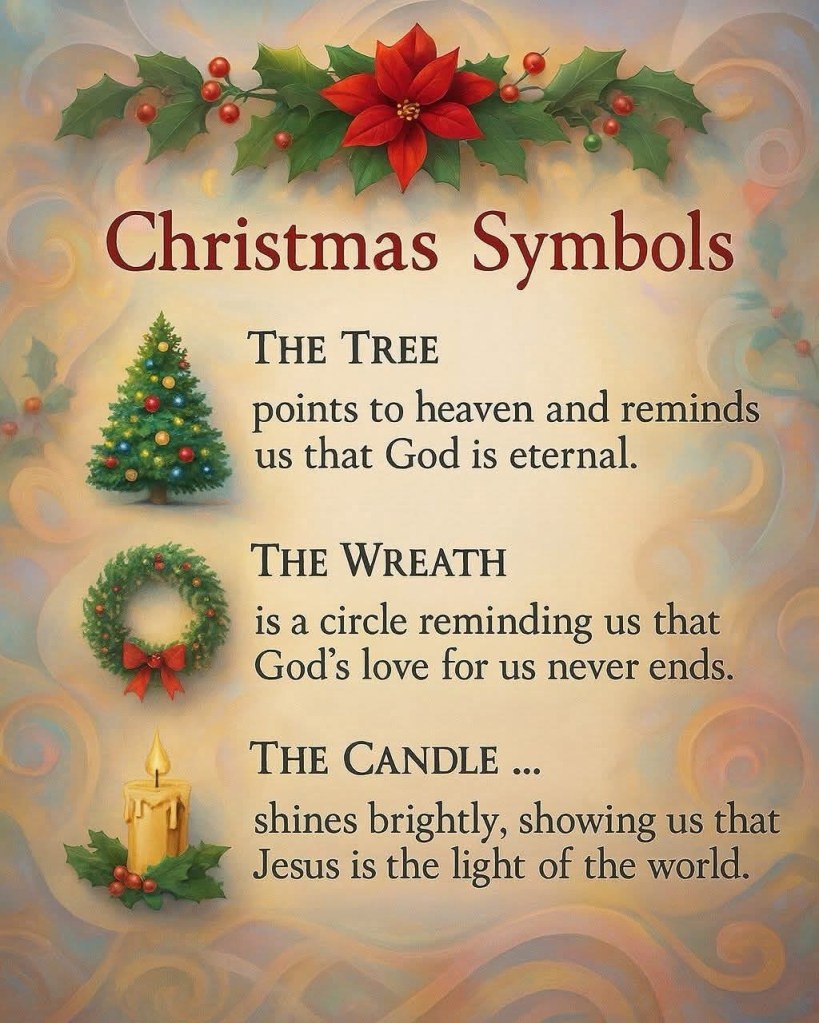
THE TREE: A Sign of Eternity
The Christmas tree points upward, directing our gaze toward heaven. Its evergreen nature speaks of life that does not fade, reminding us that God is eternal and unchanging. In a world where everything ages, decays, and ends, the tree stands as a contradiction to despair. It silently proclaims that life comes from God and that eternity is real, not imaginary or symbolic, but promised.
The tree also echoes the deeper Christian paradox: through the tree of the Cross came redemption. What once symbolized death became the instrument of life.
THE WREATH: Love Without End
The wreath, shaped as a perfect circle, has no beginning and no end. This is not aesthetic coincidence; it is theology in greenery. It reminds us that God’s love is constant, unbroken, and enduring beyond human failure. Unlike human affection, which fluctuates with mood and circumstance, divine love remains steady.
Placed on doors and walls, the wreath quietly announces a truth often forgotten: we are loved not because we are worthy, but because God is faithful.
THE CANDLE: Light in the Darkness
The candle shines against darkness, fragile yet persistent. It reflects Christ Himself—Jesus, the Light of the world. Darkness does not overcome light; it retreats from it. This is not poetic exaggeration but spiritual reality.
In Advent and Christmas, the candle reminds us that God did not eliminate darkness from a distance. He entered it. The flame does not shout; it simply burns. That is how Christ works—through presence, not force.
Why These Symbols Matter
Symbols matter because humans forget. We are visual creatures with short memories. These Christmas symbols anchor eternal truths in everyday sight. They catechize silently, preach without noise, and invite reflection without pressure.
When understood, they transform Christmas from a cultural event into a spiritual encounter.
Christmas is not about decoration. It is about revelation.
And these symbols—tree, wreath, and candle—exist to point beyond themselves, toward God who became man, entered time, and brought eternal light into the world.
 revPACman