
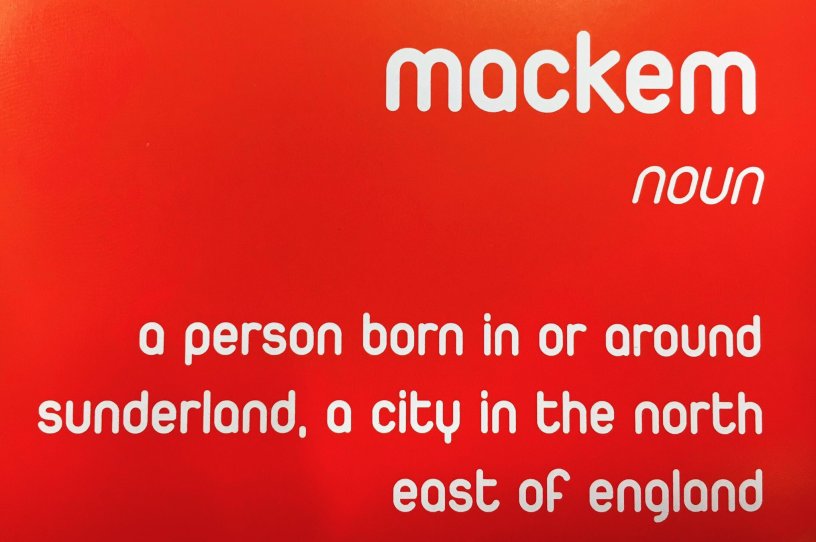
The glorious twelfth is not only the beginning of the Grouse hunting season, but the far superior National Mackem Day which is also celebrated on 12 August. Paul Swinney, author of the Mackem Dictionary suggests:
National Mackem Day is the chance for Mackem’s around the world to celebrate their heritage.
A Mackem, in case you are wondering, is a noun used to describe someone born in, or around, the city of Sunderland, a city in the North East of England. So, grab a brew and get ready for a good old Mackem read!
Granted a Charter in 1179 when a small fishing village, Sunderland is situated at the mouth of the River Wear in the North East of England.
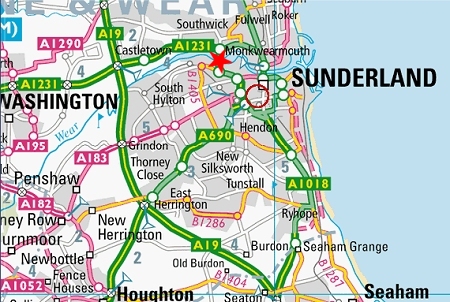
We are often known as Wearsiders, but Mackem is the more familiar, though some would say derogatory, term. The word Mackem came into popular use in the 1980’s.
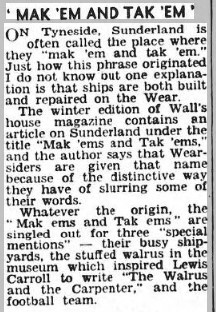
Where does the term Mackem originate? One explanation is that it stems from “mackem and tackem” with mackem an interpretation of the local pronunciation of “make them” (roughly “mack ’em”) and tackem from “take them.” The expressions date back to the height of Sunderland’s shipbuilding history as the shipwright’s built the ships that sailed down the River Wear which would sail up the North Sea to Tyneside to be outfitted, hence the origin of the phrase of someone from Sunderland: “We make ’em and they take ’em.” ‘Mak’em and Tak’em!’
There is some disagreement, however, on the spelling of mackem! This is from the Sunderland Echo in 1953.
Someone once asked what the real difference was between a Mackem and a Geordie, and the reply was: A Geordie is a Mackem without brains!
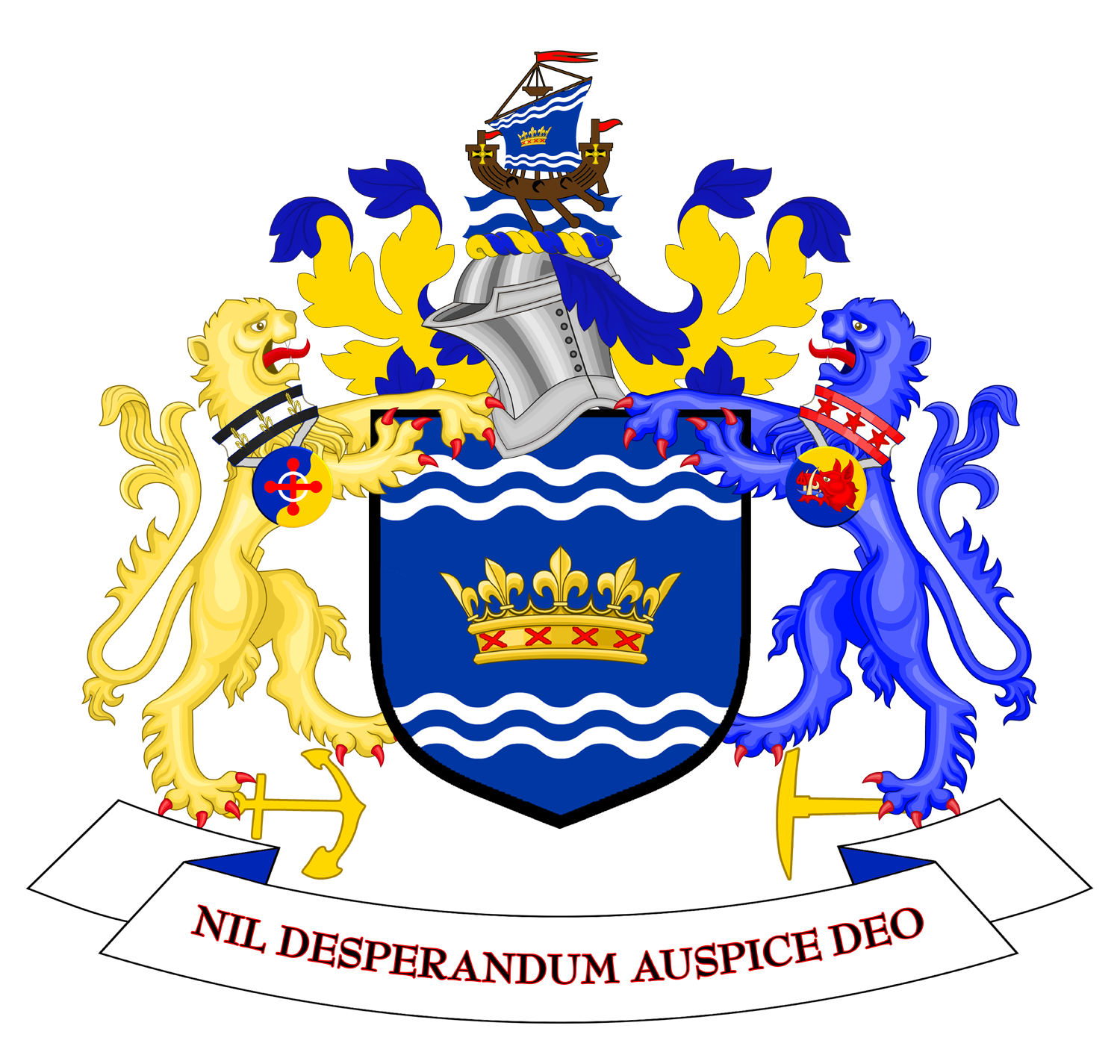
Sunderland has used Nil Desperandum Auspice Deo (When God is on our side there is no cause for despair) as it’s motto since 1849. Which is rather optimistic, given the way the industrial heartland has been destroyed, some would say ‘ripped out’ in my lifetime.
 Sunderland was once hailed as one of the largest and most prolific shipbuilding towns in the world with thousands of wood, iron and steel ships built on the Wear from at least 1346. In it’s hey day there were sixteen shipyards along the Wear. It’s said that at one time over 50% of all ships sailing in the world were built on the Wear. During World War Two 27% of merchant ships built in Britain were constructed in Sunderland’s yards. Citizens of this country might have starved without Wear-built ships. Hitler well knew this and bombed us accordingly. There have been over 400 shipyards registered on the Wear but, sadly, none survive to this day.
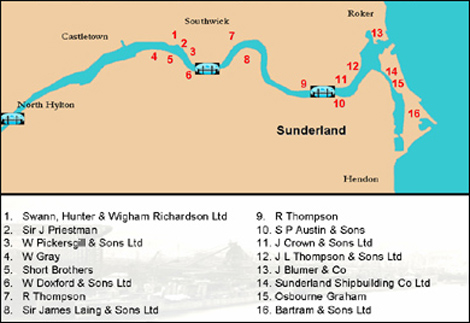
During World War Two the yards launched an extraordinary 245 merchant ships (27% of all merchant ships built at that time) winning Royal and political praise for keeping Britain supplied with essential items such as food and fuel.
Sunderland, in case you hadn’t picked this up, is the place of my birth and upbringing. I was born in the Colliery village of New Silksworth, the son, grandson and great-grandson etc., of a miner. The Carr family were some of the first miners down the pit when it was opened in 1868. I still remember my dad returning home after his last shift when it closed on 6 November 1971. The closure of the colliery decimated my community – it has never fully recovered. And did you know that Sunderland boasts the deepest coal mine in the land? Right in the middle of Monkwearmouth – about where the ‘Stadium of Light’ now resides. Read my article about …
The Durham Miners Gala
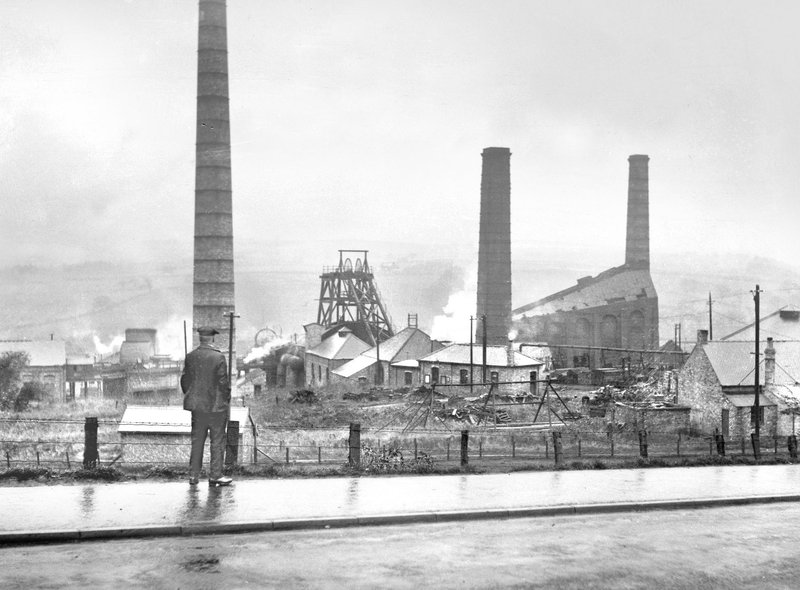
I attended the local Independent Methodist Chapel as a child (then Calvary Fellowship) and New Silksworth Infant and Junior School’s and Ryhope Comprehensive (occasionally). I worked in sales at Joseph Thompson’s Timber Merchants in Hendon and even played in Silksworth and Ryhope Colliery Brass Bands until I moved away in 1988 because of work. This is my heritage and one of which I am fiercely proud.
Living away from Sunderland, with a still strong Mackem twang, has caused people to refer to me as a Geordie in many of the places I’ve lived and worked. I’ve often had to bite my tongue and gracefully remind them that I’m actually a Mackem and to let them know, in no uncertain terms, that they couldn’t have offended me anymore if they tried.

It’s important to recognise, especially for those of you reading this article ‘darn sarf’ that not everyone from the North East is a Geordie – those uneducated Sassenach’s who live on the River Tyne, hail from Newcastle and support the mags. You know the ones I’m talking about: they remember Wor Geordie, Ant and Dec, Cushy Butterfield and Alan Shearer whilst we revere Sir Joseph Swan, Kate Adie, The Lake Poets, George Clarke and Jordan Henderson. Read Ten Mackems who put Sunderland on the map Sunderland is the place where Benedict Biscop founded the Wearmouth–Jarrow monastery in 674. 13 things you may not have known about Sunderland.
When did the Sunderland-Newcastle rivalry become so bitter? Were things less tense in the past? And how did it change?
What stokes the rivalry between ‘us and them’ apart from Football? Now that the Black Cats are back in the Premiership I’m expecting us to extend our six-in-a-row! However, Newcastle and Sunderland have a history of rivalry beyond the football pitch, dating back to the early stages of the English Civil War; the industrial disputes of the 19th Century and 20th Century – especially during World War II when Wearside was seen as taking away work from Tyneside. There are also political rivalries after the 1974 creation of the County of Tyne & Wear, rather than the traditional County Durham.
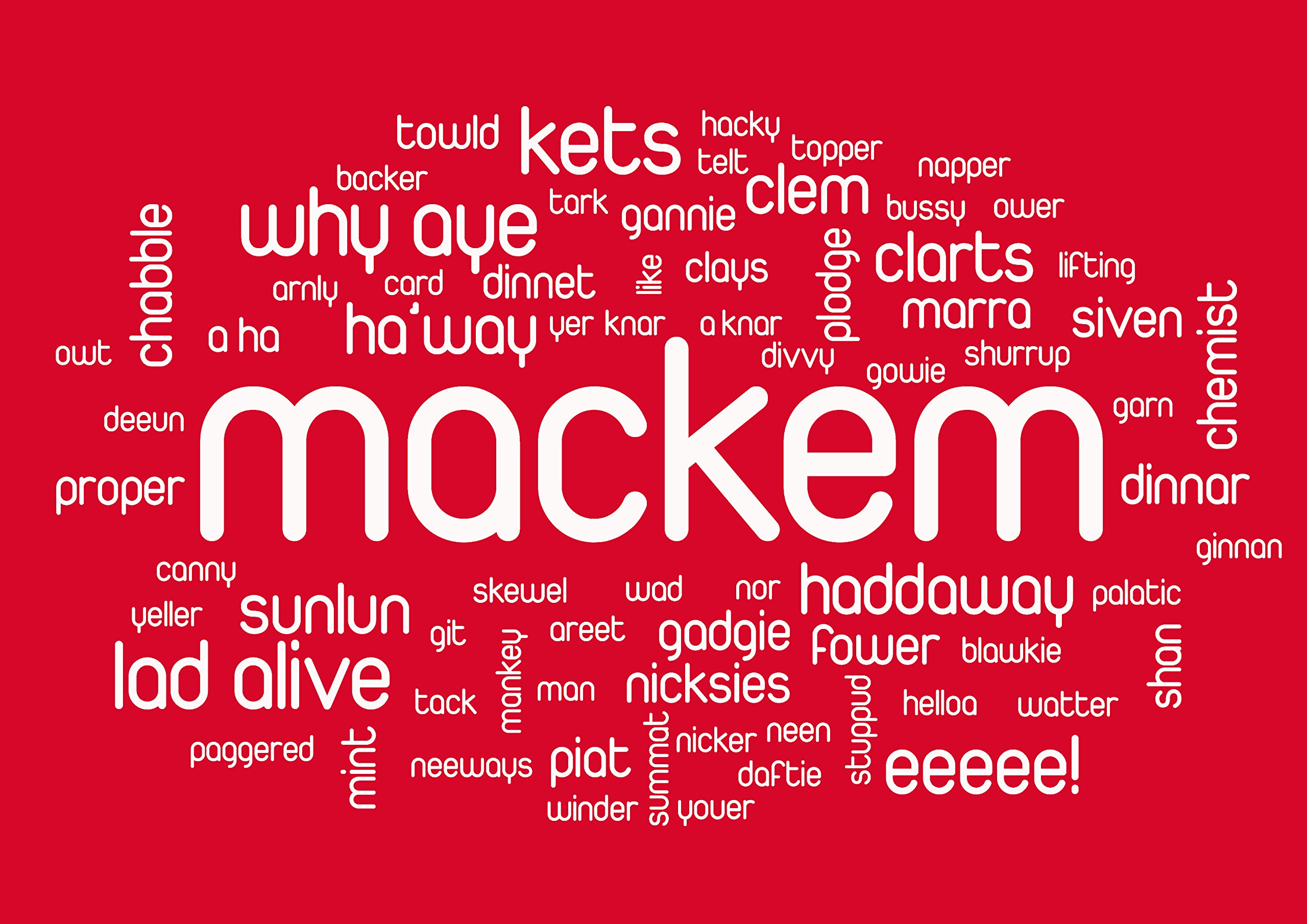
There is also a significant difference between the Mackem and geordie dialect! People from Sunderland use words such as: ‘Ellish, Ket, Haddy On, Nowt and Radgie’ that only people from Sunderland will understand. If you’re from ‘Sunlan’ you’re bound to have said these words This is also an interesting read Academic confirms that the North East speaks ‘properly!’ But we knew that already!
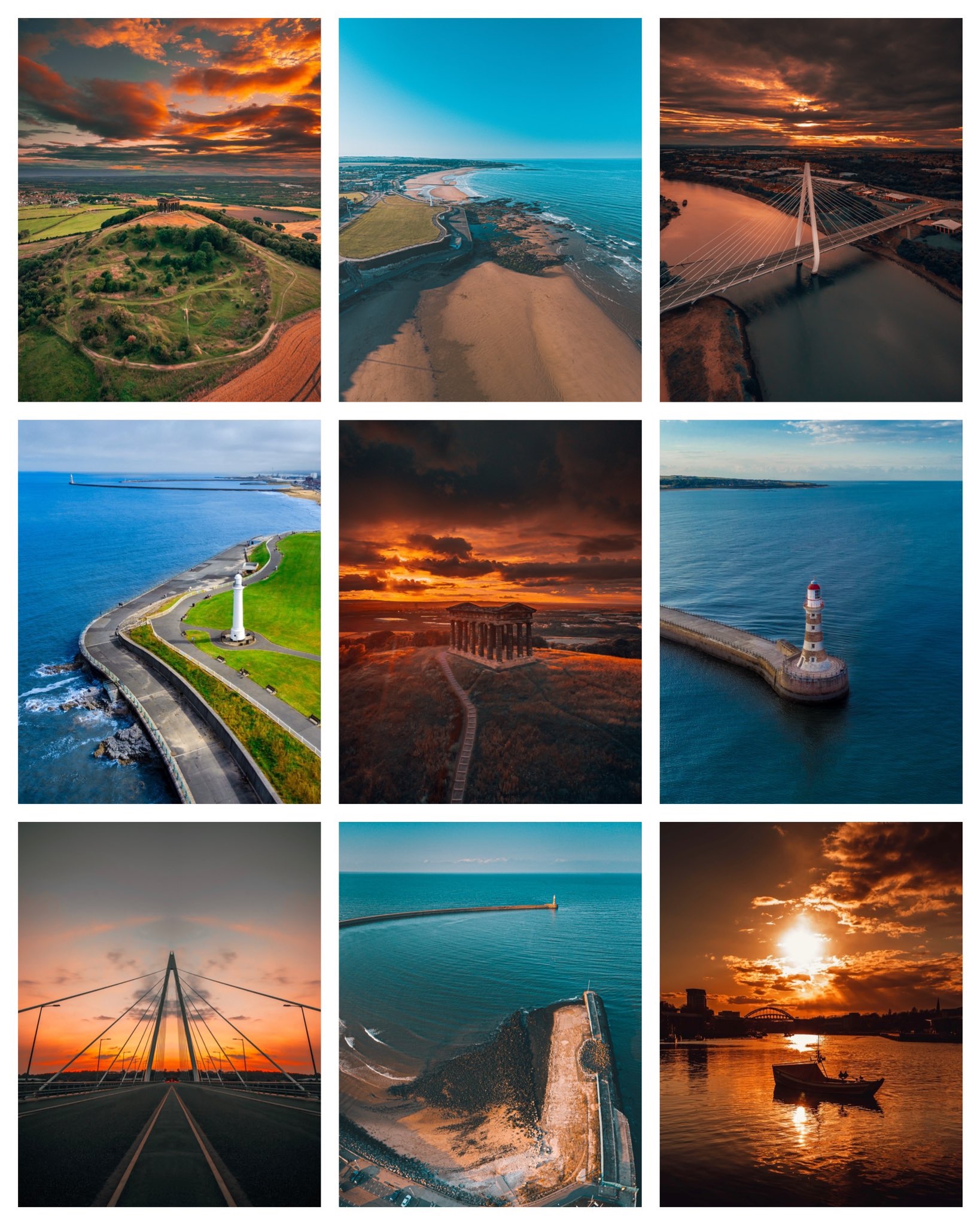
This compilation below (RJX Media) includes many famous Sunderland landmarks. If you’re a Mackem, I wonder if you know what and where they are?
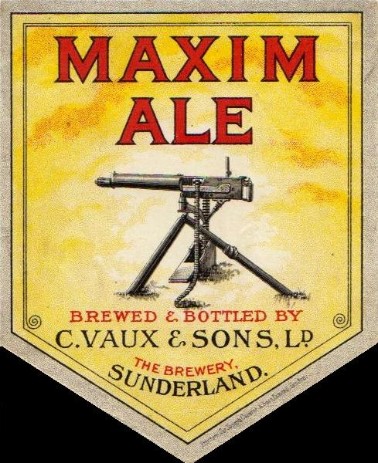
Sunderland had it’s own brewery ‘Vaux Brewery’ which has been a beloved name in Sunderland for almost 200 years. From the earliest incarnation of ‘C. Vaux & Sons’ in 1837 right through to the 1990’s, the brewery was an important part of city life in Sunderland until its closure in 1999.
Maxim Ale was first brewed in 1901 to celebrate the return of the Northumberland Hussars’ Maxim gun detachment commanded by Major Ernest Vaux (part of the original brewing family) from the Boer War in South Africa. I wonder how many people know that the beer name refers back to a machine gun!
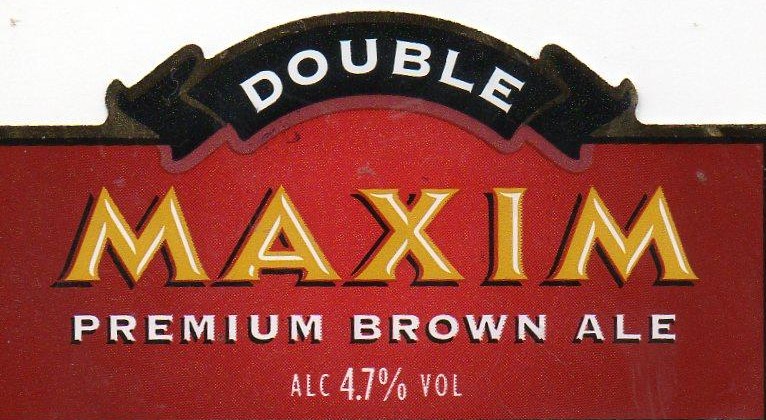
This was later renamed Double Maxim (my beer of choice – drinking from a half pint glass, of course!). There are two different stories about the origin of the ‘Double’. Some suggest that the original beer was quite strong and the strength was reduced because landlords complained their customers were falling asleep at the bar. Other stories suggest that Newcastle Brown Ale came on the market and was stronger than the Maxim and so the strength was doubled so as not to be outdone by the Geordies! You can choose which story you prefer. NB. There is an excellent review of Double Maxim on the Bikes, Bands and Booze YouTube channel here Its a great review and scores 8.5/10. It’s also less than complimentary about the Brown Ale brewed just up the road too – which is never a bad thing!
So, a happy National Mackem Day to all my marras in Sunderland, and further afield. Don’t forget to celebrate and be sure to suck some Sarsaparilla tablets, enjoy a bowl of Panackelty with some Stottie Cake, finished off with a Pink Slice, and slurp a bevvy, or two, of Double Maxim Ale.
Haway the lads!
One of my favourite artists to come out of Sunderland in recent years is The Lake Poets aka Martin Longstaff. Marty played an unforgettable House Gig at Billericay Rectory in November 2016. The following is a song he wrote about living in Sunderland – a city by the sea!
Got my copy of the Mackem Cewkbewk! With grateful thanks to Andrea and Vicky. Can’t wait to try some of what gannie used ter mack!
finally …

Updated July 2024.
 revPACman
Very illuminating!
Regards,
From a
“Cockney Sparrow”
Born under the sound of the Bow Church Bells but raised in Hainault Essex.
LikeLike