
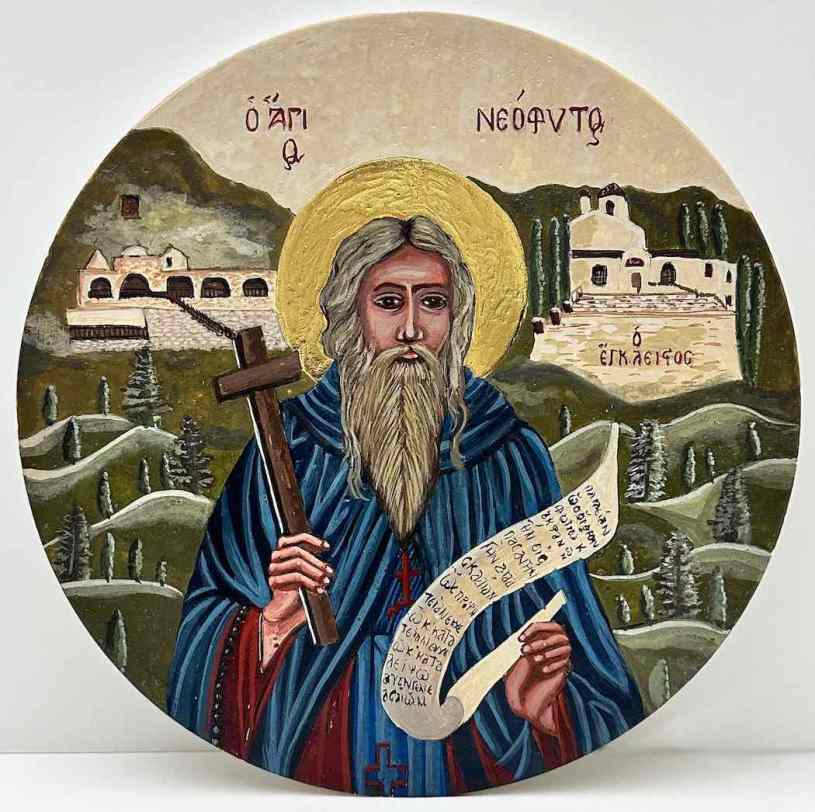
On 28 September the Greek Orthodox Church celebrate Saint Neophytos the Recluse, also known as Saint Neophytos of Cyprus, who lived as a hermit and left a vast theological and cultural imprint on the history of his homeland and the Orthodox world at large. But who was he?
Saint Neophytos was born in 1134 at the village of Kato Drys, near Lefkara, in the Larnaca district of Cyprus. His baptismal name is not confirmed by the sources; nevertheless, he is never referred to by any other name, even before entering the monastic life.
The name Neophytos derives from the Greek word neophyte, meaning a newly baptised or newly initiated person, and carries significant religious symbolism. In his writing The Typikon of the Enkleistra, he mentioned that his parents owned a modest landed property and that he was one of the family’s eight children.
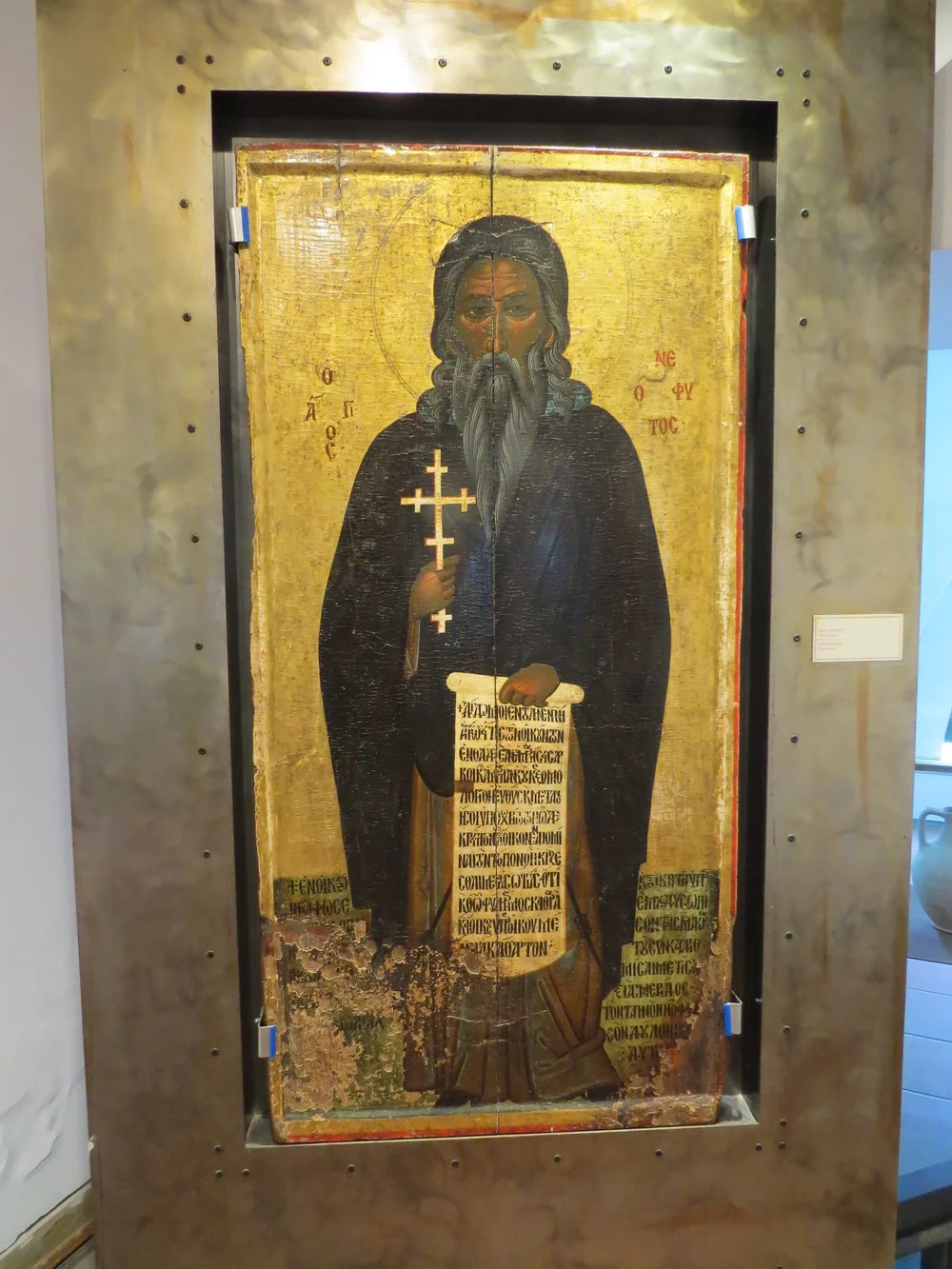
He also stated that his parents expected him to engage in agricultural work and, for this reason, did not send him to be educated by a teacher in the nearby village of Lefkara. He often complained that they had left him illiterate. After he became engaged, he fled to the Monastery of Saint John of Koutsoventis, an act that was considered a disgrace for both families.
His relatives located him and, by force, brought him back home. He then struggled to persuade his family members to dissolve the engagement and, once he finally succeeded, in 1152, he returned once again to the monastery, where this time the abbot immediately tonsured him as a monk, because, he ‘overcame the love of his relatives for the love of God.’
However, he felt that life in the monastery was busy and spiritually distracting. He desired a more secluded form of ascetic practice and therefore asked the abbot for permission to travel to the Holy Lands, where he spent six months. Subsequently, after returning to Cyprus, in his search for the solitude he longed for, he wandered across the island and eventually settled in a natural cave in Paphos, which was to become his hermitage.
Saint Neophytos dug the existing rock cave deeper and had it decorated with frescoes by skilled artists according to his own will, including portraits of himself from life. It was there that he lived the rest of his life, there that he wrote his substantial corpus of work – approximately 30-40 pieces of writing – and there that he was eventually buried when he died sometime after 1214.
The frescoed cave of Saint Neophytos, the Enkleistra, which literally means ‘place of enclosure,’ formed the core of a community of disciples who, for 350 years, lived in the caves and, in 1503, built the great church and constructed the new monastery opposite the Enkleistra. The monastery continues to flourish to this day, preserving the relics of the Saint as well as a small portion of the manuscript he himself wrote.
You can read more about Saint Neophytos on the Monastery website and details of the Feast of Saint Neophytos can be found here
‘A Window to Heaven’ is a short film made in 1990 for the Program for Art on Film, a joint venture between the Metropolitan Museum of Art and the J. Paul Getty Trust, telling the story of Saint Neophytos. Directed and produced by Adrian Maben. Script written by art historian, Professor Robin Cormack.
Revd Paul A. Carr

