
This is a copy of my talk given for the Saint Luke’s Patronal Festival in the Anglican Church of Paphos on Sunday 18 October 2026. The Bible Readings were Luke 10:1-9 & Acts 16:6-12a & 2 Timothy 4:15-17.
Prayer
Heavenly Father,
I thank You for Your word.
By the power of Your Holy Spirit,
May You speak to my heart,
And change my life.
In the precious name of Jesus I pray.
Amen.
2026 is a very significant year in the life of the Anglican Church in Paphos. Not only did we celebrate our Golden Anniversary in April, along with the Diocese of Cyprus and the Gulf, both Saint Luke’s and Saint Stephen’s are celebrating significant anniversaries. Saint Luke’s celebrate 20 years and Saint Stephen’s 25 years. And so today, we not only celebrate Saint Luke and Saint Stephen’s we also remember God’s faithfulness and the faithful service of church members in our parish over the years. NB. My sermon today focusses on Saint Luke as I will be speaking at Saint Luke’s in Polis.
Saint Luke wasn’t one of the twelve apostles, but a disciple of Jesus (just as we are). He was a: Historian. Writer. Poet. Painter. Physician. I almost feel compelled to bring out a big red book and offer those infamous words (of Eammon Andrews): “Tonight, Saint Luke the Evangelist, this is your life!” (If you didn’t get this particular cultural reference, you are obviously wonderfully young, and I am becoming much too old!)
Saint Luke is the Patron Saint of: Physicians and surgeons, artists/painters, notaries (for his careful historical writing), butchers, brewers, bachelors, and others. There are 242 parishes churches named after Saint Luke in the Church of England and 12 churches here in Cyprus – including Apostolou Louka Church in Kouklia and Ayios Loukas Church in old Nicosia. I’m sure there are many thousands worldwide.
Both scripture and tradition have furnished Luke with a huge range of skills, attributes and associations. Some of those (it has to be said) owe more to tradition, or even legend, than to scripture or reliable historical fact.
But I want to concentrate this morning on the undeniable fact of his writings. The Gospel that bears his name and its sequel, the Book of Acts – the book that recounts the first three decades of the Early Church’s history – and on a key theme that runs through them: blessing, Blessing, it seems to me, runs through the heart of Luke’s story, just like Blackpool through a stick of rock.
It is there in our Gospel reading, 10:5, ‘Whatever house you enter first say “Peace to this house!”’ Before anything else, unconditionally and freely – even a bit riskily – as it’s possible there will be no person of peace there to reciprocate. Blessing comes first. And it is the story of the Gospel as a whole.
The God of Christ Jesus who, by his messengers, offers blessings. Not judgement, not fear, not rules, not the promise of reward if we are good, but blessing before all else.
Think back to the beginning of the Luke’s Gospel (1:5-25) when the angel Gabriel comes Zechariah the priest in the Temple and says, ‘Fear not … ’ as he announces the birth of John the Baptist – a blessing for a childless couple.
And then, more memorably still – as we recall from so many Christmas readings – he comes to Mary (1:26-38) and says to her, ‘Greetings, favoured one …’ Blessing, again.
The angels at Jesus’ birth proclaim to the shepherds the blessings of God’s peace: ‘Glory to God in the highest and peace to all people on earth’ (2:8-20).
Interestingly, it is only Luke who records these parts of the Christmas story as well as the story of Jesus’ childhood, such as the Presentation in the Temple (2:21-40) and Jesus found in the Temple (2:41-51). Luke also includes some of Jesus’ most famous parables not found elsewhere, such as the Good Samaritan (10:25–37), the Prodigal Son (15:11–32), the Lost Coin (15:8–10), and the Rich Man and Lazarus (16:19–31),
The adult Jesus in his first sermon in the synagogue in Nazareth takes as his text the reading from Isaiah 61 (4:14-30): strength for the weak, courage for the fearful, sight for the blind, hearing for the deaf, freedom for the prisoners … blessings for those who have been deprived of hope and freedom.
And then, most movingly of all, in that moment on the cross Jesus promises to the criminal hanging next to him the blessing of paradise, rather than the condemnation the man might legitimately have expected (23:39-43).
Luke continues the theme in Acts, the sequel to his Gospel. He records Peter’s proclamation of the blessed fulfilment of God’s promise in the coming of the Spirit at Pentecost and Paul’s insistence that his hearers are those ‘to whom the message (the blessing) of salvation has come’.
Blessing, as you can see, is at the heart of Luke’s message. Not judgement, not condemnation. Blessing.
Now, I doubt that I would need to work hard to persuade you that we are living through troubled times, times deeply in need of blessing, not least the blessing of peace.
The Iranian War in our Diocese, with international consequences. The continuing war in Ukraine with little sign of its ending. World Governments losing control of their economies. Natural disasters having a significant impact on the poorest and most vulnerable.
I’m certain there are issues in this community, too, that are in need of a message of blessing and of hope. I would suggest there maybe troubles and griefs in families and relationships represented here, that are painful and threatening.
Our world is greatly in need of being blessed, of being healed. Luke was writing just as much for us as he was for Christians in Antioch in the first century AD.
Which makes it all the more important to remember what his message was, and how it was delivered. A message of blessing. Blessings of peace and hope and reconciliation – delivered by God’s messengers. By his angels. By the seventy whom Jesus commissioned in our Gospel reading. By Jesus himself in his ministry. By Peter and Paul and the apostles in Acts. Offering a new story and a changed narrative for their troubled times and message of blessing and hope for the times in which we live today.
But it’s not just churches named after Saint Luke that are called to agents of blessing to the community in which it is set. It is a mandate for all churches. You are the seventy: not, perhaps on the road, exactly, but certainly sent out from here to bless, to offer love and kindness and joy outside these walls. That is why we are here – it’s the whole point of our calling and our worship.
In Jesus’ words in Matthew’s Gospel you – we – are to be light and salt and leaven, that is adding colour and zest and airiness, to the community in which you are set. You do this – I have no doubt – in your personal interactions with friends, neighbours, family, workmates and others.
After the end of Acts, Luke disappears from the story. He is mentioned in Paul’s epistles, confirming that he travelled with Paul: the only one who is still with me (2 Timothy 4:11) but the New Testament doesn’t tell us what happened to him afterwards.
According to tradition, after the martyrdom of Saint Paul in AD 67, Luke continued to preach throughout the Mediterranean. He is said to have lived a long life and was eventually martyred at the age of 84 in the Greek city of Thebes.
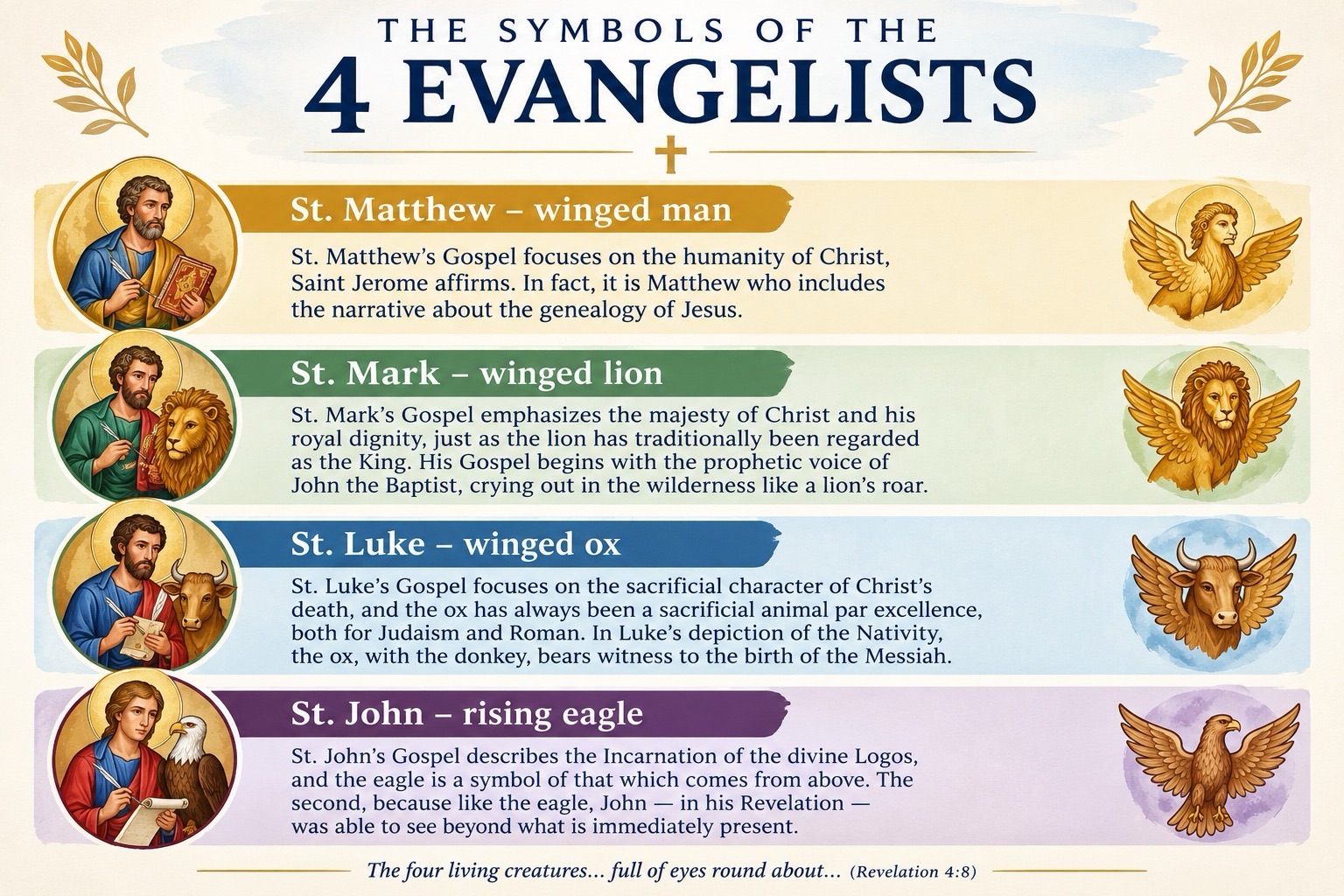
The symbol of Luke’s gospel is an Ox (Matthew, a man; Mark, a lion; and John, an Eagle). Why an Ox? For thousands of years the Ox has symbolised patience and calm in daily life. It’s not too difficult to see why such an ordinary, humble creature symbolises aspects of our life in Christ. Oxen often work in pairs, and sometimes in teams. They are yoked together so that they pull in the same direction.
By patience and persistence, they achieve what is needed: a field ploughed, a load moved. It is no different with us. By patience and persistence, by the constant balm of God’s care we are brought from illness to health in Christ who bears our wounds to heal them. The Church is not a gathering of the perfect, but a hospital for the convalescent.
Here we are aided by the prayers of others and our own; here we are fed by the words of scripture and the sacraments of the gospel, both of which bring to us the Word made flesh; here we welcome others also in need of healing. Yoked to them in love we pull together to accomplish what God makes possible through us, and in us, and between us.
As a Church, individually and collectively, we are called, like Luke, to share the good news of God’s love. Whether it is in quiet ways – like Luke’s writing, in active ways – like Luke rolling up his sleeves and joining in with Paul’s missionary journey, or perhaps through our involvement in community activities and events.
For us it might mean being a Doctor, Physio, Nurse, Office worker, Banker, Politician, Accountant, Teacher, Parent, Grandparent, those we meet in Retirement. In whatever we do, our purpose and call as children of God, is to share the good news by love, service, prayer and blessing so that together we are a community that know what our purpose is and recognising that we have a Gospel to proclaim and can serve the common good of those around us.
Prayer for Saint Luke’s Patronal Festival
O Lord of mercy and truth,
who called Saint Luke the beloved physician
to heal the body with skill
and the soul with the Gospel’s light:
Grant that we, inspired by his witness,
may tend the wounds of our world
with hands of compassion,
with words that speak peace,
and with hearts steadfast in hope.
As Luke traced the footsteps of Christ
and told the story of salvation,
so may we walk in that same way,
proclaiming good news to the poor,
binding up the broken hearted,
and rejoicing in the kingdom that has no end.
Through Jesus Christ our Lord,
who lives and reigns with You and the Holy Spirit,
one God, now and forever.
Amen.
COPYRIGHT DISCLAIMER The text contained in this sermon (except where stated) is solely owned by its author, Revd Paul A. Carr. The reproduction, or distribution of this message, or any portion of it, should include the author’s name. The author provides free sermon resources in order to inspire believers and to assist preachers and teachers in building God’s Kingdom and making disciples.

