
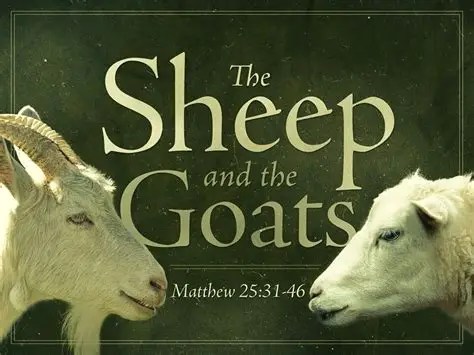
This is a copy of my talk given in the Anglican Church of Paphos on Christ the King Sunday 22 November 2026. The Bible Readings were Ezekiel 34:11-16 & 20-24, Ephesians 1:15-23 and Matthew 25:31-46.
Prayer
Heavenly Father,
I thank You for Your word.
By the power of Your Holy Spirit,
May You speak to my heart,
And change my life.
In the precious name of Jesus I pray.
Amen.
Introduction
Christ the King Sunday was introduced in 1925 when Pope Pius XI directed The Roman Catholic Church to set aside one Sunday in the year to declare that: Jesus Christ is King. It wasn’t embraced by the Anglican Communion until 1970, when it was placed on the Sunday before Advent.
Some see Advent as a time for a spiritual shake-up. Thomas Cranmer obviously thought so when he wrote his famous Collect for today: Stir up, we beseech thee, O Lord, the wills of thy faithful people, that they, plenteously bringing forth the fruit of good works, may of thee be plenteously rewarded, through Jesus Christ our Lord.
It’s one of those great prayers of the Church – though it was replaced by a new collect when Common Worship was introduced and ‘relegated’ to the Post Communion Prayer!
On this final Sunday of the Church’s year, we find ourselves in Matthew’s gospel, 25:31-46, which speaks of the Judgement Day, using the example of ‘The Sheep and the Goats.’ Some say this is a parable, but Matthew doesn’t say that Jesus spoke a parable, so perhaps Jesus’ words here are much more significant than we may think. It is a penetrating and, in many ways, disturbing, picture painted by Jesus. There are three aspects I want us to consider this morning: The Judge, The Judged and The Judgement.
The Judge
If car mechanics assess cars, teachers assess their pupils, who should assess human beings? A fellow human being of course! That’s what happens in a court of law – we are assessed by our peers. We call it trial by Jury! And that is precisely what the world is presented with in Jesus who took to himself the title, ‘Son of Man.’ Vs31: ‘When the Son of Man comes in his glory, and all the angels with him, he will sit on his heavenly throne.’ Jesus is one of us.
Someone who has walked this weary war-torn world; who has known the pull of temptation; the disappointment of love betrayed; the grief of loved ones lost. We need someone who has experienced the whole range of human emotions, its troughs as well as its peaks, and has had to wrestle with all the struggles common to humanity, for only then is he in a position to say: ‘I know exactly where you are coming from, for I have been there too.’
Now I don’t know about you, but I take some comfort from knowing that. When someone comes along telling us what we should or shouldn’t be doing and who really haven’t ever proved themselves on the ground, we aren’t too impressed are we?
I think it was George Bernard Shaw who said ‘Those who can, do. Those who can’t, teach. Those who can’t teach, teach teachers.’ It may be a little cynical but many of us have had enough experience to know there is more than a grain of truth in that.
Jesus, the judge has been there. Done it. Got the T-shirt! But not only is this judge human, he is also divine, in vs34 he speaks of ‘My Father.’ This is not only the Son of Man, this is the unique Son of God.
As such, his knowledge is infallible, his judgements impeccable, his wisdom inscrutable. He knows everything about us. If we have any mitigating circumstances, he is fully aware of them. He has been following our progress, Psalm 139, from the moment we were conceived. As a man he knows from the inside what it is to be human; as part of the Godhead he knows from the outside, what it is to be human. Can you think of anyone better qualified to judge humankind?
The Judged
Vs32 ‘All the nations will be gathered before him, and he will separate the people from one another as a shepherd separates the sheep from the goats. He will put the sheep on his right side and the goats on his left.’ And vs34: ‘Then the King will say to those on his right, ‘Come you who are blessed by my Father.’
The imagery here is of all conquering King who gathers his new subjects around him to determine which have been loyal to him and so will continue in his kingdom and those which have been traitors, his enemies, and so are to be banished. He separates them into sheep and goats. In Near Eastern tradition, being placed on the right hand of the King signifies approval and being placed on the left denotes condemnation.
But who are the righteous, vs37? And who are the cursed, vs41? Do you honestly know which group you belong to? Is it simply a matter of being religious? Is it calling yourself a Christian, saying the Creed and attending church? We can’t say: ‘Yes I believe in Jesus, yes he died for my sins,’ but don’t allow it to make any difference to the way we behave towards one another, treat our family or other church members.
Jesus says there are sheep and there goats. Those who follow him and those who don’t. Many in the world, and perhaps even in the church, are in for a surprise when we come to:
The Judgement
Now you may say there is nothing surprising about this judgement at all. It is simply that good people get to heaven, those who care for the sick and needy, who visit those in prison and hospital, while it is the mean and selfish and those who belong in prison who have got it coming on judgement day. Heaven is full of nice people and hell is full of bad people. So, you can be just as good a Christian by being kind to one another.
Well, if that is the case, then we have a major problem, because that idea flatly contradicts everything the NT teaches, namely that we are saved by grace, through putting our faith in Christ’s work on the cross – the sinless one dying for sinners. We contribute nothing to our salvation except our sin, and we accept God’s forgiveness with nothing to offer in return except offering our lives in service. As Paul wrote in Ephesians 1:17: I pray that that the God of our Lord Jesus Christ may give you a spirit of wisdom and revelation as you come to know him. …
There are two other important things to bear in mind. The first is that the Bible makes a significant link between faith and works, what we claim to believe and what we actually do. So, while we are not saved by good works, we are saved for good works.
And secondly, we need to pay close attention to what the passage actually says, which means paying attention to some of the detail. Now remember these are words spoken by Jesus to his disciples who want to know about the end of the world. They, like most of his audience at the time, were Jews. And as far as they were concerned, it was a matter of belonging to the right group which meant belonging to Israel, even becoming an honorary Jew through circumcision, and keeping the laws and traditions and the rituals, that made you one of God’s sheep.
Here Jesus speaks of ‘all the nations’ literally all the ‘pagans’ and from some of these comes God’s sheep, God’s chosen, members of the Kingdom. We saw that in Ezekiel 34: For thus says the Lord God: I myself will search for my sheep, and I will seek them out. Vs16: I will seek the lost and bring back the strayed, I will bind up the injured and I will strengthen the weak …
So, membership of this kingdom is no longer based upon national affiliation or religious heritage. What is more, this inheritance spoken of in vs34 in which the righteous are to share, the happiness of God, has been prepared for them since before the world was made, before they were even born – in short, it is a gift of God not dependent upon merit.
The King says to his people, vs35 ‘For, here is the basis for my judgement – when I was hungry you gave me something to eat, thirsty something to drink, naked, you clothed me’ and so on. But how? When did this take place ? Vs40/45 ‘Whatever you did for one of the least of these brothers of mine, you did it for me.’
The basis for judgement and approval will be whether we accept and love Jesus. And whether we really accept and love Jesus is measured not by how much we say or how much we sing, but by how much we love and care for others. Because you might be the only example of Jesus somebody ever sees.
A preacher once said: “A lot of you who fill these pews every Sunday are the very reason more people aren’t sitting in them.” I think we sometimes forget that the way we treat people, both inside and outside of church, says a lot more about our faith than showing up on a Sunday ever will. Some people aren’t staying away from church because they don’t love God. They’re staying away because they’ve been hurt by people who claim to love Him. And that’s heartbreaking and I know it to be true – even in this parish.
Conclusion
A lady handed this poem to a country vicar, when, after asking him for help, he promised to pray for her. I’m led to believe it had a tremendous influence on the setting up of the homeless charity Shelter founded by Rev Bruce Kenrick on 1 December 1966 in Notting Hill, London.
I was hungry, and you formed a humanities group to discuss my hunger.
I was imprisoned, and you crept off quietly to your chapel and prayed for my release.
I was naked, and in your mind, you debated the morality of my appearance.
I was sick, and you knelt and thanked God for your health.
I was homeless, and you preached to me of the spiritual shelter of the love of God.
I was lonely, and you left me alone to pray for me.
You seem so holy, so close to God,
But I am still very hungry – and lonely – and cold.
COPYRIGHT DISCLAIMER The text contained in this sermon (except where stated) is solely owned by its author, Revd Paul A. Carr. The reproduction, or distribution of this message, or any portion of it, should include the author’s name. The author provides free sermon resources in order to inspire believers and to assist preachers and teachers in building God’s Kingdom and making disciples.

